Ghana’s efforts to build international reserves are facing competing demands from external debt repayments, foreign-exchange market interventions and the need to supply dollars to domestic businesses, complicating plans to achieve 15 months of import cover by the end of 2028.
The challenge lies at the centre of the Ghana Accelerated National Reserve Accumulation Programme (GANRAP), which requires the Bank of Ghana (BoG), the Ghana Gold Board (GoldBod) and the Ministry of Finance to coordinate reserve accumulation with the country’s external payment obligations.
The central bank’s September economic and financial data showed gross international reserves of US$12.05 billion as of September 22, equivalent to 4.5 months of import cover. This is below the programme’s target of 8.6 months by the end of 2026.
The International Monetary Fund’s 2026 projections put Ghana’s total external debt service at approximately US$4.7 billion for 2026, rising to US$5.05 billion in 2027 and US$5.3 billion in 2028.
The country also faces scheduled payments to the IMF of approximately SDR103 million for the remainder of 2026, SDR244 million in 2027 and SDR262 million in 2028, according to the Fund’s September 30 payment schedule.
These obligations compete with the government’s ambition to retain more foreign exchange in reserve accounts.
Meanwhile, the Bank of Ghana must also manage pressures on the domestic foreign-exchange market. Its interventions are intended to address imbalances between dollar demand and supply, limit excessive exchange-rate volatility and contain the inflationary effects of currency depreciation.
Such operations, however, can require the central bank to release part of its accumulated reserves into the market.
GoldBod’s revised foreign-exchange framework provides another layer to the balancing act. Under its October plan, the Board is targeting US$1.5 billion in foreign-exchange receipts, with US$1 billion earmarked for authorised commercial banks and US$500 million for reserve accumulation.
While the commercial-bank allocations help importers and businesses access dollars, the portion transferred to the central bank directly supports reserve building.
The policy challenge is therefore to determine how much foreign exchange should be retained, released into the market or reserved for foreseeable public-sector payments.
A coordinated reserve-management plan linking GoldBod’s monthly receipts to the central bank’s liquidity requirements and the Finance Ministry’s debt-service calendar could help improve these decisions.
The authorities also need to strengthen non-gold foreign-exchange inflows, reduce leakages in the energy sector and improve fiscal discipline to limit repeated withdrawals from reserves.
With gold prices weakening and external debt payments rising, Ghana’s reserve ambitions will depend not only on generating more foreign exchange but also on managing its use more efficiently.
Without better coordination, efforts to accumulate reserves could be undermined by the same domestic and external obligations the buffers are intended to protect against.
Business News of Saturday, 24 October 2026
Source: businesspostonline.com
Debt repayments and forex interventions slow Ghana's reserve growth
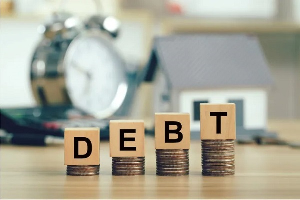 Ghana must manage reserves amid rising debt




Entertainment