The Ghana Mineworkers’ Union (GMWU) has accused the Ministry of Lands and Natural Resources of misleading the public over claims that it has held extensive consultations with the union on the government’s contract mining policy, insisting that no such engagement had taken place as of October 21, 2026.
In a strongly worded statement issued on October 22, the union rejected the ministry’s assertion, describing it as “factually inaccurate” and demanding a correction.
The dispute follows a press release issued by the ministry on October 21, titled Government Issues Further Policy Directive on Contract Mining, which indicated that consultations had been ongoing with the leadership of the GMWU.
The union, however, insists that it has neither been consulted nor engaged in discussions with the ministry on the concerns it has raised about the implementation of the Local Content Policy, particularly its implications for contract mining and workers’ conditions of service.
“The claim therefore that it has engaged extensively with the Union’s Leadership is not factual and ought to be disregarded,” the statement said.
Union says government ignored petition
The GMWU said it petitioned the Ministry of Lands and Natural Resources on August 20, 2026, after expressing concerns about the Local Content Policy and the challenges it believes the contract mining arrangements could create for mineworkers.
According to the union, the concerns include worker exploitation, abuse, casualisation of labour and the erosion of employment protections secured over several decades.
It warned that the policy, if implemented without adequate safeguards, could leave mineworkers trapped in what it described as a “working poverty syndrome”.
The union said its petition called on the government to suspend the directive and initiate an inclusive, transparent and good-faith stakeholder engagement process that places workers at the centre of policy decisions.
However, it claimed that more than two months after submitting the petition, and despite repeated reminders to the ministry and the government, no practical steps had been taken to address its concerns through direct engagement.
The GMWU said the ministry’s assertion that extensive consultations had taken place was therefore misleading, insisting that no consultation had occurred as of the date of the October 21 press release.
‘Local content must not become a vehicle for exploitation’
While challenging the government’s account, the union stressed that it does not oppose the participation of Ghanaian businesses in the mining industry.
Rather, it said its objection centres on arrangements that could undermine workers’ rights and transfer the benefits of mining from employees to contractors.
“The GMWU wishes to reiterate that we are not opposed to responsible participation of Ghanaian businesses in the mining sector just like most of their multinational counterparts have consistently done,” the statement said.
“We are strongly opposed to any policy or practice that transfers wealth from workers to contractors, weakens social protection, undermines decent work and violates workers’ rights.”
The union argued that local content policies should create sustainable employment and broaden opportunities for Ghanaians instead of allowing a few contractors to benefit at the expense of workers.
“Local content must create decent and sustainable jobs and provide opportunities for all Ghanaians. It cannot become a vehicle for exploitation to enrich a few contractors at the expense of the workers who risk and sweat day and night in the bowls of the earth to produce the wealth,” it added.
The GMWU maintained that the country could not build a prosperous mining industry by impoverishing the workers whose labour generates its wealth.
GMWU cautions Minerals Commission over workers’ conditions
The union also raised concerns about media engagements involving the Minerals Commission, the government and other stakeholders on contract mining, local content and workers’ conditions of service.
It reminded the Minerals Commission and the government that several issues affecting mineworkers fall within the scope of collective bargaining and are regulated by the Labour Act, 2003 (Act 651).
The GMWU consequently urged the authorities to exercise caution in adopting what it described as a unilateral approach to matters concerning workers’ conditions of service.
Its position is that policy decisions affecting employment arrangements and labour protections must respect the established collective bargaining framework and the rights of workers.
Despite the dispute, the union said it remained committed to working with relevant stakeholders to develop the mining industry while protecting the interests of all parties, including workers.
It maintained that local content should advance national development without compromising workers’ rights, dignity and livelihoods.
The latest statement sets the stage for further debate over the government’s contract mining policy, with the GMWU demanding that the Lands Ministry correct its account of consultations and address the concerns raised by the union on behalf of its more than 15,000 members.
EA
General News of Friday, 23 October 2026
Source: www.ghanaweb.com
GMWU accuses Lands Ministry of false claims over contract mining talks
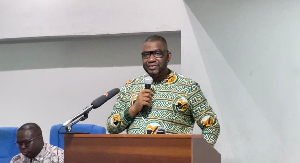 Ghana Mineworkers’ Union (GMWU)




Entertainment