Ghana is considering a Ghana–China Market Access Council to help local businesses overcome production, financing, certification and logistics challenges and take advantage of China’s zero-tariff policy for eligible Ghanaian exports.
The proposal was tabled by Eric Nii Amu Okotokata Dodoo-Amoo, Head of the China Desk at the Ministry of Finance, during the High-Level Ghana–China Zero-Tariff Forum 2026, held at the African Continental Free Trade Area (AfCFTA) Secretariat in Accra on Thursday, October 15.
The proposed council would bring government agencies, financial institutions, exporters, regulators, logistics providers, business associations and Ghana–China trade experts under one coordinating platform to help Ghanaian businesses navigate the Chinese market.
The initiative comes amid concerns that tariff-free access alone will not guarantee export growth unless local businesses can meet the commercial, regulatory and logistical demands of Chinese buyers.
Although China’s zero-tariff policy presents an opportunity for eligible Ghanaian products, exporters continue to face challenges, including limited production capacity, standards and certification requirements, inadequate export financing, logistics costs, insufficient market intelligence and difficulty connecting with credible buyers.
Dodoo-Amoo argued that improved coordination among institutions supporting exporters would help address these obstacles and make it easier for businesses to identify and access the assistance they need to enter the Chinese market.
If established, the council would provide a central point for information and support, clarify the responsibilities of relevant institutions, reduce duplication and help exporters navigate the requirements for doing business in China.
Speaking at the forum, Paul Frimpong, Executive Director of the Africa-China Centre for Policy and Advisory (ACCPA), stressed the need to move beyond discussions about market access towards practical measures that generate measurable export results.
“The Council should be an action-oriented platform that brings the relevant institutions together, resolves practical barriers and focuses on measurable export outcomes,” he said.
ACCPA has pledged its readiness to support the development of the proposed council through policy research, stakeholder coordination, China-focused market intelligence, institutional partnerships and sustained engagement between Ghanaian exporters and Chinese market players.
The proposal builds on an earlier Ghana–China Zero-Tariff Policy Roundtable convened by ACCPA and CEIBS Africa, which examined Ghana’s preparedness to take advantage of the policy, particularly in standards compliance, logistics, trade finance, productive capacity and engagement with buyers.
The forum, co-hosted by ACCPA and CEIBS Africa, attracted about 200 participants from government, the private sector, financial institutions, diplomatic missions, development partner organisations, academia, trade-support agencies and the media.
Held under the theme, “From Market Access to Market Success,” the gathering focused on practical steps Ghana must take to convert improved access to China’s market into increased exports, industrial expansion and sustainable job creation.
Participants cautioned that the removal of tariffs would not automatically make Ghanaian products competitive in China. Businesses must still offer the right prices, maintain consistent quality, meet packaging and certification requirements, and demonstrate the capacity to supply orders reliably.
These challenges could determine whether Ghanaian businesses translate the policy opportunity into sustained commercial gains or struggle to compete despite the improved terms of access.
The proposed Ghana–China Market Access Council is expected to address the coordination gap by connecting businesses with the institutions, expertise and services required to prepare products for export and secure buyers.
However, its effectiveness would depend on a clear mandate, defined institutional responsibilities and measurable targets for export performance.
If implemented, the initiative could help Ghana move beyond the promise of tariff-free access towards a more coordinated export strategy, with the ultimate goal of expanding trade with China, supporting local industries and creating jobs.
For Ghanaian exporters, the central challenge remains turning the opportunity presented by China’s zero-tariff policy into actual orders, repeat business and sustainable growth.
Business News of Thursday, 22 October 2026
Source: www.ghanaweb.com
Zero Tariffs, Big Hurdles: Ghana seeks new strategy to export to China
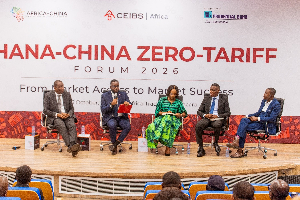 Ghana is considering a Ghana–China Market Access Council