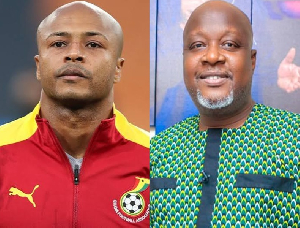
On October 22, 2024, Ghana’s political landscape was reflecting on a significant legal setback for People’s National Convention (PNC) flagbearer Bernard Mornah, whose bid to overturn his disqualification from the December 7 presidential election had been rejected by the High Court in Accra a day earlier.
The ruling, delivered on Monday, October 21, by Justice Richard Apietu, affirmed the Electoral Commission’s (EC) decision to disqualify Mornah over irregularities in his presidential nomination forms. The court held that the PNC flagbearer had been given an opportunity to address the identified anomalies but had failed to make adequate use of it.
For Mornah, the decision was more than a courtroom defeat. It dealt a major blow to his ambition to lead the PNC into the 2024 presidential election and opened another chapter in the debate over electoral rules, administrative fairness and the right of political aspirants to contest public office.
How nomination errors became a legal battle
The dispute began when the EC, following its review of presidential nomination forms submitted between September 9 and 13, 2024, disqualified 11 aspirants, including Mornah, from the December polls.
The commission cited irregularities in the nomination documents, including incomplete details of supporters, questions surrounding voter identification particulars and inconsistencies in signatures. It maintained that the affected aspirants had been given opportunities to correct certain anomalies.
Mornah, however, challenged the decision, arguing that the EC had acted unfairly and failed to provide him with sufficiently specific reasons for his disqualification or a proper opportunity to address the alleged errors.
On September 24, 2024, he took the matter to the Accra High Court, seeking to overturn the EC’s decision and compel the commission to recognise him as a duly qualified presidential candidate. He also argued that the commission’s actions breached the principles of administrative fairness and provisions of the 1992 Constitution, including Article 23, which requires administrative bodies to act fairly and reasonably.
The legal challenge placed the EC’s handling of nomination irregularities under scrutiny, raising questions about how electoral authorities should balance strict compliance with nomination requirements against candidates’ rights to participate in elections.
Why the court rejected Mornah’s case
In dismissing the application, Justice Apietu concluded that the evidence before the court did not justify overturning the EC’s decision.
The court noted that Mornah and the PNC had been notified of anomalies in their nomination forms and given an opportunity to address them. It faulted them for failing to take sufficient advantage of that opportunity.
The judge also considered the PNC’s experience in previous elections, indicating that the party should have exercised greater care in preparing and submitting its candidate’s nomination documents.
Mornah’s legal team disagreed with the ruling. His counsel, Harold Atuguba, maintained that the errors complained of had not been adequately specified and that the candidate had not received a fair opportunity to correct them.
The EC, represented by lawyer Justin Amenuvor, maintained that the commission had given Mornah and his party the opportunity to rectify the anomalies.
The court dismissed the application without awarding costs against Mornah, recognising the constitutional nature of the dispute.
‘This case is not ending here’
Unwilling to accept the outcome as the final word, Mornah indicated that he intended to challenge the decision at the Supreme Court.
Following the ruling, he criticised the court’s reasoning and insisted that his concerns about the EC’s conduct had not been adequately addressed.
“The EC made mistakes on their forms, and we are not allowed to make mistakes,” he argued, questioning the nature of the errors cited against him.
He also indicated that he had instructed his lawyers to study the ruling and pursue further legal action.
His response underlined the depth of the disagreement between the PNC flagbearer and the electoral authorities over whether the disqualification process had been fair and consistent with the law.
A lesson in electoral preparedness
Looking back on the episode, Mornah’s legal battle serves as a reminder that presidential ambitions depend not only on political support and campaign strategy but also on strict compliance with electoral procedures.
For the EC, the case reinforced its position that candidates must satisfy the requirements governing nomination and take corrective opportunities seriously. For Mornah and the PNC, the ruling represented a setback in their effort to secure a place on the presidential ballot.
The dispute also raised a broader question for Ghana’s electoral democracy: how can the country ensure that nomination rules are rigorously enforced without leaving candidates feeling that their right to contest has been unfairly denied?
As Ghana marked another anniversary of the ruling on October 22, 2026, the case remained a notable episode in the story of the 2024 elections—one in which nomination forms, constitutional arguments and the limits of electoral discretion collided in court.
Ultimately, Mornah’s experience offered a clear lesson for political parties and presidential aspirants: every detail matters when the opportunity to contest a national election is at stake.
EA
General News of Thursday, 22 October 2026
Source: www.ghanaweb.com
Today in History: Bernard Mornah’s presidential dream meets a court defeat
 Bernard Mornah