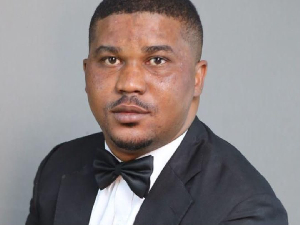
Philip Quaque became the first African to be ordained as a minister by the Church of England at a time when racism was widespread, and the slave trade was deeply entrenched.
However, Quaque’s journey was not an easy one. Growing up in the Gold Coast, where he was reportedly known as Kweku, he was one of three Fante children taken to England in 1754 by a missionary to receive an education by the Society for the Propagation of the Gospel (SPG), an Anglican missionary organization.
In England, two of the three children faced tragic fates. Thomas Cobbers died in 1758, while William Cudjoe reportedly suffered a mental breakdown and died in 1766, leaving Kweku as the only one of the three to remain.
He took the name Philip and studied theology at Oxford before being ordained in 1765 by the Bishop of London at the Chapel of St James. That same year, he married Catherine Blunt, an English woman, before the couple returned to Cape Coast in 1766.
His return marked the beginning of decades of missionary work and efforts to provide formal education to children on the Gold Coast.
Quaque is said to have spent so many years abroad that he reportedly forgot his native language before returning home to make history as an Anglican priest and educator.
Quaque became a missionary for the SPG and chaplain to the Royal African Company at Cape Coast Castle, a major centre of the transatlantic slave trade.
Despite working at an establishment connected to the trade, Quaque expressed opposition to slavery at a time when many people associated with such institutions rarely challenged it in their writings.
Beyond his religious duties, Quaque made education a key part of his work.
Philip Quaicoe: The first African Anglican priest opened a school only for 'mulattoes'
He opened a small school in his room at Cape Coast Castle in 1766, which initially catered to children of mixed African and European ancestry, described in historical accounts as mulatto children.
The school followed the English charity school system of Islington. Pupils received religious instruction and were taught to read and write. Arithmetic was introduced when they had developed strong reading skills, according to the Dictionary of African Christian Biography.
The school was also intended to train clerks for the Public Office. By 1797, three of its students were reportedly working as writers for the Committee of Merchants in Cape Coast.
Although the school initially catered largely to children from wealthy African families and those of mixed ancestry, it later began admitting more children from African homes.
Its influence grew over the years, producing students who would become part of the educated elite of the Gold Coast.
Philip Quaque died in Cape Coast in 1816 at the age of 75. He was buried in the courtyard of Cape Coast Castle.
The school he established in 1766 was later named Philip Quaque Boys School in his memory.
Through the school, he helped lay part of the foundation for formal education on the Gold Coast.
MAG/VPO
Inside Ghana’s Abandoned Engineering Powerhouse: What Went Wrong?
General News of Wednesday, 21 October 2026
Source: www.ghanaweb.com
The forgotten story of the first African to be ordained Anglican priest
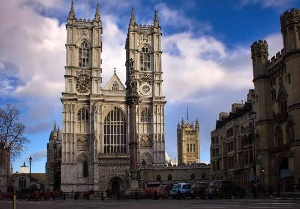 A view of the Church of England where Philip Quaque was ordained as a minister