Banks operating in Ghana recorded GH¢1.86 billion in bad debt charges as of August 2026, despite improvements in loan repayment across the banking sector.
The amount represents a 76.3% increase from the GH¢1.05 billion recorded during the same period in 2025, according to the Bank of Ghana’s latest banking sector report.
The increase highlights the continued challenges banks face in recovering loans from customers who are unable to meet their repayment obligations.
According to the central bank, the non-performing loan (NPL) ratio dropped to 15.7% in August 2026 from 20.8% a year earlier.
SMEs still pay over 30% on loans despite falling rates
However, the total value of non-performing loans increased slightly to GH¢20.2 billion from GH¢19.8 billion in August 2025.
The Bank of Ghana explained that the increase was mainly driven by exchange rate movements, which affected the value of non-performing loans denominated in foreign currencies.
This means that although the proportion of bad loans relative to total loans declined, the overall value of loans in default increased.
The report also revealed that the private sector accounted for 98% of all non-performing loans in August 2026, compared with 97.4% during the same period last year.
Meanwhile, the public sector’s share of non-performing loans declined to 2%, indicating that the vast majority of unpaid loans were attributable to private sector borrowers.
Banks also recorded an increase in operating expenses, which rose by 6.4% to GH¢13.25 billion during the period.
Despite these challenges, the Bank of Ghana reported improvements in loan repayment performance across most sectors of the economy.
GoldBod FX sales boost expected to make cedi stable in coming weeks
However, the central bank warned that non-performing loans remain a major concern and urged banks to strengthen their lending practices and credit risk management to minimise further defaults.
DR/MA
Inside Ghana’s First 950,000-Barrel Sankofa Oil Shipment | Exclusive Tour
Business News of Wednesday, 21 October 2026
Source: www.ghanaweb.com
Banks record GH¢1.86 billion in bad debt charges as loan defaults persist
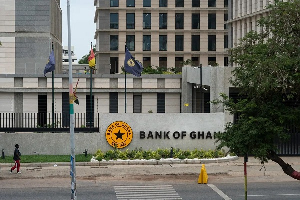 The Bank of Ghana (BoG) headquarters








Opinions