Long before Ghana became an independent nation, the struggle over who should govern the Gold Coast was already dividing chiefs, challenging traditional authority and reshaping political alliances.
On October 21, 1954, the Asanteman Council formally endorsed a federal system of government, giving significant traditional backing to the National Liberation Movement (NLM) and deepening an already bitter political contest with the ruling Convention People’s Party (CPP).
The decision was more than a declaration on constitutional arrangements. It exposed disagreements within the chieftaincy institution, intensified tensions between Asante and other traditional authorities, and raised a question that continues to shape Ghanaian public life: how far should chiefs go in partisan politics?
The NLM and the battle over federalism
The National Liberation Movement emerged in September 1954 amid growing opposition to the CPP government led by Kwame Nkrumah. Its supporters favoured a federal arrangement for the Gold Coast, arguing for a constitutional structure that would protect regional interests and limit excessive concentration of political power at the centre.
The Asanteman Council’s resolution on October 21 gave the federalist campaign an important traditional endorsement. However, the move did not mean that all chiefs across the Gold Coast supported the NLM. Instead, it set the stage for further divisions as traditional authorities weighed their political loyalties against local interests, customary obligations and concerns about regional influence.
For Asante, the question of federalism was closely connected to the future of traditional authority and the region’s place in the emerging constitutional order.
Yet the endorsement also had consequences beyond Asante. Some chiefs viewed the development with suspicion, while others saw an opportunity to strengthen their own political position or resist domination by more powerful traditional authorities.
Ofori-Atta II and the question of political neutrality
In Akyem, the position of Okyehene Nana Ofori-Atta II presented a more cautious approach to the relationship between chieftaincy and party politics.
As chairman of the Joint Provincial Council of Chiefs (JPC), he maintained that chiefs should observe political neutrality. His position reflected the difficult balancing act facing traditional rulers at a time when party competition was increasingly influencing local governance and national constitutional debates.
However, events later in 1954 complicated that stance. In December, Ofori-Atta II publicly honoured his uncle, J.B. Danquah, a prominent nationalist politician and a leading figure in opposition to Nkrumah’s government.
Danquah had lost his seat in Kyebi to his nephew, Aaron Ofori-Atta, and subsequently travelled to the United States on a United Nations fellowship. On returning to the Gold Coast, he openly declared his support for the NLM.
The developments illustrated how political differences could become entangled with family relationships, royal-house affairs and competing visions for the country’s future.
The J.B. Danquah appointment that sparked controversy
Danquah’s return also brought another controversy into the political arena.
He was appointed a senior divisional chief in the Adonten Division of the Kyebi royal house. According to the historical account, the appointment was apparently made without consultation with Adontenhene Kwabena Kena II, who supported the CPP.
The appointment drew criticism in the legislature from Aaron Ofori-Atta, Danquah’s nephew and political opponent. He questioned whether the decision conformed to customary law and argued that it amounted to a waste of public funds.
Aaron also alleged that Danquah was receiving an annual salary of £600 for the position.
The controversy was significant because it brought together three sensitive issues: the authority of the traditional institution, the interpretation of customary law and the use of public resources. It also demonstrated how disagreements over chieftaincy appointments could become ammunition in the wider struggle between political factions.
The episode was not simply a family disagreement. It reflected a broader contest over who had the authority to make decisions within traditional institutions and how those decisions should be scrutinised.
When the NLM divided the chiefs
The Asanteman Council’s endorsement of the NLM also contributed to resistance among some chiefs outside the movement’s strongholds.
The Bechemhene, for instance, was destooled in December 1954. Other chiefs from areas including Amansie, Atebubu and Dormaa reportedly aligned themselves with the CPP, partly because they feared that supporting the NLM could jeopardise development projects in their communities.
Their choices reflected the political realities of the period. Traditional authorities were not operating in isolation from government. Their communities depended on development decisions, public investment and relationships with the political administration. In such circumstances, political neutrality could be difficult to maintain, while openly supporting one party could carry both advantages and risks.
For some chiefs, backing the CPP offered a way to protect local interests. For others, supporting the NLM represented an opportunity to challenge the existing political order.
The divisions also exposed tensions within the traditional hierarchy. Brong chiefs, in particular, saw the changing political climate as an opportunity to pursue greater autonomy from Asante influence and press for a separate region.
Their position demonstrated that the federalism debate was about more than the relationship between the central government and the regions. It was also about power among traditional authorities, the boundaries of regional influence and the prospect of greater political self-determination.
The NLM’s growing influence in Ashanti
Despite the divisions, the NLM consolidated its position in Ashanti during the period that followed.
By the end of 1955, the movement had secured control of local politics in Ashanti, with the figures provided in the historical account putting the balance at 17 NLM seats against 11 for the CPP.
The figures illustrate the movement’s political strength in the region and the extent to which the federalism debate had become a defining feature of the Gold Coast’s pre-independence struggle.
However, the contest was not merely a straightforward confrontation between Asante and the CPP. Political loyalties varied across communities, and chiefs made decisions influenced by local development concerns, customary disputes, regional ambitions and competing constitutional visions.
The period therefore offers a more complicated picture of traditional authority than one in which chiefs acted as a single political bloc.
A question Ghana has yet to settle
The events of October 21, 1954, remain relevant to discussions about chieftaincy and partisan politics in Ghana.
The Asanteman Council’s endorsement of the NLM showed how traditional institutions could influence national political debates. The disagreements among chiefs, the controversy surrounding Danquah’s appointment and the competing interests of communities across the country also demonstrated the difficulties of separating customary authority from political competition.
More than seven decades later, the relationship between chiefs, elected governments and political parties remains an important issue in Ghana’s democratic life.
The central question is not whether traditional authorities have a place in public affairs. Chiefs continue to contribute to community development, conflict resolution, cultural preservation and local governance. The more difficult question is how they can perform those roles while maintaining public confidence in their impartiality, particularly when political parties compete for influence.
The events of 1954 offer no simple answer. Instead, they reveal a longstanding tension between tradition and electoral politics, regional autonomy and national unity, and customary authority and partisan allegiance.
On October 21, 1954, the Asanteman Council made a consequential political choice by endorsing federalism through the NLM. That decision helped expose the competing interests shaping the Gold Coast on the road to independence—and left behind a question that Ghana continues to confront: where should the line be drawn between the authority of the stool and the politics of the state?
EA
General News of Wednesday, 21 October 2026
Source: www.ghanaweb.com
Today in History: How Asanteman’s NLM endorsement shook Gold Coast politics in 1954
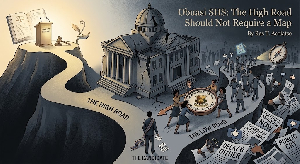
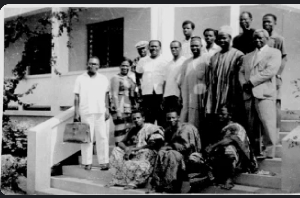 When Chiefs Picked Political Sides: The 1954 Decision That Shook the Gold Coast