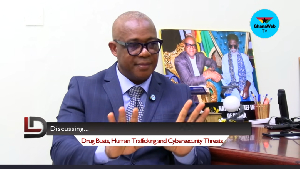
Executive Secretary of the National Commission on Small Arms and Light Weapons (NACSA), Dr Adam Bonaa, has explained why the commission does not publicise all arrests involving illegal firearms in Ghana.
According to him, publicising every firearm-related arrest could create a misleading impression about the prevalence of guns in the country and potentially affect Ghana’s image as a relatively peaceful destination.
Speaking in an interview on GhanaWeb TV’s Lowdown show, Dr Bonaa said NACSA works with security agencies to arrest people involved in firearm-related offences but deliberately limits the information it releases to the public.
“We do a lot of arrests. I mean, you see, we don't publish it. Because publication can be good, but it can also have another effect,” he said.
He explained that information released without sufficient context could be misconstrued and cause unnecessary public concern.
Dr Bonaa illustrated his point by comparing perceptions of firearm ownership in Ghana and the United States, arguing that the way information is communicated can influence how people view a country’s security situation.
“Information can be positive, can be negative. Information can be misconstrued, and information that is not well thought through and put out there can be injurious to society,” he stated.
He said the publication of numerous arrests involving firearms could lead people to assume that gun possession was widespread in Ghana, even when the figures did not necessarily reflect that situation.
Dr Bonaa also disclosed that NACSA works closely with security agencies, including the police, the Bureau of National Intelligence (BNI) and Customs, to monitor firearm imports and ensure accountability.
He explained that when a consignment of weapons arrives in the country, the commission’s special operations team and relevant security agencies inspect the boxes, count the weapons and identify their types.
According to him, the process is intended to promote transparency between importers and the authorities responsible for monitoring and controlling firearms.
Dr Bonaa stressed that firearm ownership in Ghana should not be viewed as an unrestricted right, describing it instead as a privilege.
His comments highlight the balance NACSA seeks to maintain between informing the public about firearm-related offences and preventing the release of information that could create misleading perceptions about Ghana’s security situation.
NA/VPO
General News of Tuesday, 20 October 2026
Source: www.ghanaweb.com