The sexual assault allegations against the headmaster of Obuasi Senior High Technical School (SHTS), Zakaria Abdulai, have raised fresh questions about the scope of an earlier investigative committee's work, after an account of the proceedings indicated that he admitted meeting a female student on the day she allegedly said she was raped and giving her GH¢100.
According to the account, the student, identified as Victim A, alleged that the incident occurred on July 25, 2026, at the headmaster's bungalow. Abdulai reportedly acknowledged meeting the student that day but denied raping her, offering a different explanation for their encounter.
The account has renewed scrutiny of the committee established to investigate disturbances at the school in August, with concerns being raised about whether allegations of sexual misconduct received adequate attention during the inquiry.
Student's account and headmaster's response
Victim A reportedly told investigators that she had gone to retrieve clothes she had dried on a lawn near the headmaster's bungalow when the alleged incident occurred.
Abdulai, according to the account of his testimony, admitted calling the student over when she came to collect her clothes. He reportedly maintained, however, that he wanted to discuss an earlier incident in which the student had allegedly been beaten by a teacher.
The headmaster denied the rape allegation.
One of the key issues raised in the account concerns a GH¢100 note the student reportedly presented after making her complaint to teachers. She allegedly claimed that Abdulai gave her the money after the incident and asked her to remain silent.
Abdulai reportedly confirmed giving the student GH¢100 but offered a different explanation, saying she had approached him to discuss her financial difficulties.
The two accounts differ on the circumstances surrounding the payment. The fact that the headmaster acknowledged giving the student money does not, by itself, establish the allegation that it was intended to silence her.
The account also states that the student presented her shorts, alleging that the headmaster's semen had spilled on them. The evidential significance of the clothing, including whether it was subjected to forensic examination, was not established in the information available.
Questions over oils found in headmaster's room
The account further states that Abdulai acknowledged having oils of different colours in his room.
Some female students had allegedly accused him of forcing them to stroke his penis. According to the account, the headmaster explained that he obtained the oils through part-time work with a herbal medicine company.
His reported admission to possessing the oils does not, on its own, establish the allegations made by the students. Their claims and his explanation require assessment through a fair and thorough investigation.
Committee's mandate under scrutiny
The committee that questioned the headmaster was established to investigate the student disturbances at Obuasi SHTS. According to the account, sexual assault was not expressly included in its terms of reference, although the issue reportedly arose during the proceedings.
The circumstances have prompted questions about whether the committee's mandate and investigative process were adequate to address the sexual misconduct allegations, particularly if complaints had previously been brought to the attention of education authorities.
The account's author has also questioned the roles of the Obuasi East and Obuasi Municipal education directorates, as well as the Ashanti Regional Directorate of the Ghana Education Service (GES), calling for scrutiny of how earlier complaints were handled.
However, allegations that officials failed to act on complaints must be independently established. The officials concerned should be given an opportunity to respond, and any findings of misconduct should follow a fair process.
Fresh investigations and accountability
The controversy has taken on greater significance following the Ghana Education Service's decision to interdict Abdulai in October 2026, pending a full-scale investigation into allegations of sexual misconduct involving students. The Education Ministry has also directed his suspension and requested police investigations into the matter.
The earlier committee's findings concerning the August school disturbances should be distinguished from the separate investigation into the fresh sexual misconduct allegations. A finding that particular claims were not substantiated by evidence presented to one committee does not, in itself, settle allegations that are being examined through a separate process.
The central questions remain whether the student's allegation can be established, whether previous complaints were properly handled, and whether school and education officials fulfilled their safeguarding responsibilities.
For students, parents and the wider school community, the priority is a credible investigation that protects complainants, preserves relevant evidence and ensures that anyone found culpable is held accountable in accordance with the law.
EA
General News of Tuesday, 20 October 2026
Source: www.ghanaweb.com
A school bungalow, a student and GH¢100: The Obuasi SHTS sexual assault mystery
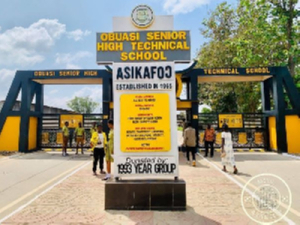 Zakaria Abdulai, Obuasi SHTS Headmaster