Rear Admiral Joy Amedume, a former Chief of Naval Staff of the Ghana Navy, was among six senior military officers executed by firing squad on June 26, 1979, during the Armed Forces Revolutionary Council’s (AFRC) anti-corruption campaign.
Amedume’s execution remains part of the debate surrounding the AFRC’s controversial “house-cleaning” exercise, which targeted former military rulers and senior officials accused of corruption and abuse of office.
One allegation reported against the naval officer concerned a bank loan of 50,000 old Ghana cedis, equivalent to GH¢5 following Ghana’s 2007 currency redenomination.
He was executed at the Teshie Military Range in Accra alongside former Head of State General Fred Akuffo, former military ruler Lieutenant General Akwasi Afrifa, Major General Robert Kotei, Air Vice-Marshal George Yaw Boakye and Colonel Roger Felli.
The executions took place under the AFRC, led by Flight Lieutenant Jerry John Rawlings, following the June 4, 1979, military uprising that toppled the Supreme Military Council government.
The council described its campaign as a national “house-cleaning” exercise intended to address corruption, indiscipline and the abuse of public office.
A report published by The Washington Post on June 26, 1979, stated that the six officers had been convicted by secret military tribunals of misusing their positions to enrich themselves.
Watch chilling account of how a man survived Rawlings’ final death penalty executions
The executions followed those of former Head of State General Ignatius Kutu Acheampong and former Border Guard commander Major General EK Utuka on June 16, 1979.
The military tribunals and subsequent executions became subjects of criticism in later years, raising questions about due process and the treatment of the accused officers.
A historical account published by Ghana’s National Reconciliation Commission in October 2004 documented the executions as part of the AFRC period, one of the most turbulent chapters in the country’s post-independence political history.
Although the AFRC justified its actions as part of its campaign against corruption, the circumstances surrounding the executions have continued to feature in discussions about accountability, justice and the rule of law.
In 2001, the remains of the officers executed in 1979 were released to their families for reburial, more than two decades after their deaths.
JKB/VPO
Guns and Drugs: Dr Adam Bonaa Warns of Growing Security Threat to Ghana
General News of Tuesday, 20 October 2026
Source: www.ghanaweb.com
The story of the Ghanaian naval chief executed in 1979
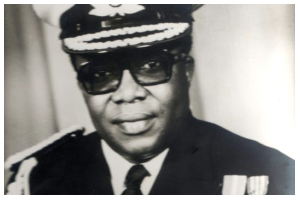 Rear Admiral Joy Amedume was executed in 1979 during the AFRC regime