Founder of Class Media Group, Alhaji Seidu Agongo, has charged Accra TV to make credibility, accuracy and accountability the foundation of its operations, warning that public trust cannot be demanded but must be earned through responsible journalism.
Speaking at the launch of Accra TV, Agongo said the media had a critical responsibility to help restore confidence in public institutions at a time when people were increasingly questioning the credibility of information and the motives of those in positions of authority.
“Trust cannot be demanded. Indeed, trust gotten through demands is unsustainable. Rather, it must be earned,” he said.
According to him, the launch of the new television station should go beyond the excitement surrounding the expansion of the Class Media Group to address the more fundamental issue of trust between the media and the public.
He argued that trust remained essential to relationships across society, from families and communities to businesses and public institutions, but warned that it was facing increasing pressure in Ghana and elsewhere.
“All over our country and across the world, we see citizens questioning the motives of leaders. Leaders also sometimes doubt the faith of citizens,” Agongo said.
He added that employees were questioning fairness in the workplace while businesses and employers were becoming increasingly concerned about loyalty, creating an environment in which people were struggling to determine whom to believe.
“The challenge of our time is not a lack of information. We are surrounded by information. The challenge is determining what is credible, what is transparent, and what is true,” he said.
Agongo identified the media as a crucial link between institutions and citizens, stressing that its ability to perform that role effectively depended on its commitment to credibility and the public interest.
“The media serves as the bridge between institutions and the people, between facts and public understanding. But that bridge can only stand if it is built on trust,” he stated.
He urged journalists and media organisations to prioritise verification, fairness and consistency in their work, insisting that responsible journalism required media practitioners to inform the public without unnecessarily inflaming tensions.
“Trust is earned through accuracy, fairness, consistency and accountability. It is earned when we verify before we publish, when we inform rather than inflame, and when we have the courage to correct whenever we err,” he said.
The Class Media Group founder maintained that credibility, rather than the sophisticated equipment and infrastructure used in broadcasting, was the organisation’s most valuable asset.
“At Class Media Group, the umbrella body of Accra TV, our most valuable asset has not been our studios, cameras or transmitters. Our most valuable asset has been and will continue to be our credibility,” he said.
He indicated that the same principle would guide Accra TV as it joins the media group, adding that the true measure of an organisation’s commitment to trust emerged when doing the right thing became difficult.
“For me as a businessman who has seen almost all the cycles of life and entrepreneurship, the real litmus test of trust is not what we do when things are easy. It is what we do when transparency is difficult,” Agongo stated.
He assured stakeholders, particularly viewers, that Accra TV would strive to establish itself as a platform for reliable information, constructive dialogue and accountability.
“As we launch Accra TV this evening, let me reassure our stakeholders, particularly our audience and viewers, that we are committing ourselves to being a trusted platform for facts, dialogue and accountability. We will be a platform that listens, informs and serves,” he said.
Agongo further argued that public trust was essential not only to the media industry but also to national development, noting that confidence in institutions and information could contribute to stronger businesses, more cohesive communities and a thriving democracy.
“For we know and appreciate that when trust grows, societies prosper, businesses succeed, and democracy flourishes,” he said.
He expressed appreciation to the staff and audience of the Class Media Group, crediting their dedication, support and confidence in the organisation for helping it navigate both challenging and favourable periods.
He concluded by calling for a collective commitment to building a culture of trust, reaffirming his belief that credibility and responsible communication should remain central to the media group's work.
“Thank you for believing in our vision. Together, let us build a culture of trust,” he said.
General News of Monday, 19 October 2026
Source: www.ghanaweb.com
Credibility, not cameras, is media’s greatest asset - Agongo
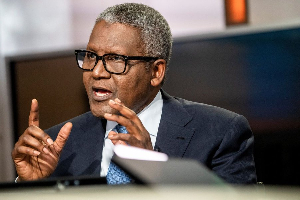
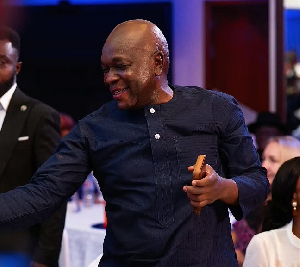 Seidu Agongo


Entertainment