The Ghana Medical Association (GMA) is calling for the establishment of a formal Ghana Diaspora Health Compact to strengthen healthcare delivery through collaboration between Ghana and its health professionals in the United Kingdom.
GMA President, Professor Ernest Yorke, said the proposed agreement would help coordinate diaspora contributions and align them with Ghana’s healthcare needs.
GMA President Ernest Yorke calls on Ghanaians to fight corruption
He made the call at a conference organised by the Ghanaian Doctors and Dentists Association UK (GDDA-UK) at the Leonardo Hotel in Milton Keynes on October 17, 2026.
Speaking on the theme, Advancing Health and Wellbeing: The Diaspora’s Role in Achieving SDG 3, Professor Yorke said Ghana needed a structured system to make diaspora support more coordinated and sustainable.
The GMA is advocating for a structured, government-to-government and association-to-association Diaspora Health Compact between Ghana and the United Kingdom, he said.
He explained that the proposed agreement would bring together key health institutions and professional associations in Ghana and the UK to identify gaps in specialist care and match them with available expertise.
The proposal includes establishing a register of Ghanaian health professionals in the UK, introducing a simplified temporary licensing process for diaspora doctors who want to practise in Ghana, and developing joint research programmes.
Professor Yorke said the lack of coordination among diaspora groups, hospitals, charities and individual specialists sometimes resulted in duplicated efforts and interventions that did not fully address Ghana’s healthcare needs.
"There are multiple actors — diaspora associations, NGOs, NHS trusts, pharmaceutical companies, faith communities and individual specialists — all working in parallel, sometimes duplicating efforts and sometimes working at cross-purposes with national priorities," he said.
He also called for stronger partnerships between UK National Health Service (NHS) hospitals and Ghanaian health facilities to support long-term training, staff exchanges and telemedicine services.
Professor Yorke further proposed that existing institutional partnerships be strengthened through long-term arrangements rather than short-term projects.
"What I am proposing is that we revitalise this model — move it from short-term project funding to long-term, endowment-based institutional partnerships between named NHS trusts and named Ghanaian hospitals", he said.
He further called for scheduled specialist outreach programmes in areas including cancer care, kidney treatment, paediatric surgery and mental health.
According to him, a nationally coordinated outreach calendar would help ensure that specialist support was planned around Ghana’s healthcare needs rather than depending on the availability of individual doctors.
Prof Yorke also urged Ghanaian health professionals in the UK to support research, invest in health infrastructure and advocate for Ghana’s healthcare needs in international policy discussions.
He said the diaspora’s contribution should go beyond occasional medical missions and equipment donations to building lasting partnerships that improve healthcare delivery.
"The relationship between Ghana and its diaspora in health is not a transactional one. It is not simply that Ghana needs doctors and the diaspora provides them, or that Ghana has sick people and the diaspora brings medicines," he added.
Prof Yorke acknowledged the contributions of remittances and diaspora professionals to Ghana’s health sector but said a more organised approach was needed to make their impact more effective.
Meet Professor Ernest Yorke: The new President of the Ghana Medical Association
He said the proposed compact and other partnerships could help improve access to specialist care, strengthen training and support Ghana’s efforts to achieve the United Nations’ Sustainable Development Goal 3 (SDG 3), which seeks to ensure healthy lives and promote well-being for all.
MAG/MA
Inside Ghana’s First 950,000-Barrel Sankofa Oil Shipment | Exclusive Tour
General News of Monday, 19 October 2026
Source: www.ghanaweb.com
GMA calls for establishment of formal Ghana Diaspora Health Compact – Professor Yorke
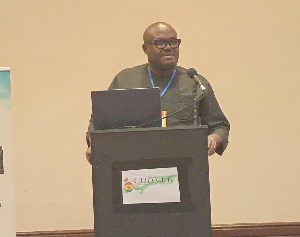 Professor Ernest Yorke is the President of the Ghana Medical Association