Ghana earned GH¢7.82 billion in mineral royalties between January and September 2026, more than double the GH¢3.79 billion recorded during the same period in 2025.
The Minerals Income Investment Fund (MIIF) said the 106% increase was largely driven by higher gold prices, improved monitoring of mining activities and changes in how royalties are calculated.
The strong performance means the Fund has already achieved nearly 87% of its GH¢9 billion revenue target for 2026, with three months remaining in the year.
According to MIIF, large-scale gold mining contributed the biggest share of the revenue, generating GH¢7.66 billion in the first nine months of 2026, compared with GH¢3.54 billion during the same period last year.
GoldBod supports us, it has not taken over forex role – BoG Governor
This represents an increase of about 116%, highlighting the growing contribution of gold mining to Ghana's mineral revenue.
Royalties from mid-tier gold mining companies also nearly doubled, rising from GH¢55.31 million to GH¢110.34 million over the same period.
The Fund attributed the overall increase partly to the sliding-scale royalty system, which allows the government to receive a higher percentage of mineral revenue when gold prices rise.
Other minerals also recorded increases, although their contributions remained relatively small.
Revenue from quarry operations increased from GH¢10.8 million to GH¢11.35 million, while sand royalties rose by 41% from GH¢390,274 to GH¢550,871.
However, limestone royalties declined from GH¢7.08 million to GH¢4.84 million.
MIIF explained that the decline was mainly due to reduced production, particularly during the second quarter, when heavy rainfall affected mining activities.
The latest figures follow a strong first half of 2026, during which the Fund collected more than GH¢5.3 billion in mineral royalties, compared with approximately GH¢2.64 billion in the first half of 2025.
Commenting on the performance, MIIF Chief Executive Officer, Justina Nelson, said the Fund remains committed to ensuring that Ghana benefits from its mineral resources through responsible financial management and strategic investments.
She explained that MIIF's work goes beyond collecting royalties to investing mineral revenues in opportunities that can generate long-term returns for the country.
These include investments in mining businesses, financial securities and other income-generating ventures.
With GH¢7.82 billion already recorded, MIIF needs approximately GH¢1.18 billion more in the final three months of 2026 to meet its GH¢9 billion target.
Oil prices drop despite attacks on ships in Middle East
The Fund operates under the Minerals Income Investment Fund Act, 2018 (Act 978), as amended, which mandates it to manage and invest Ghana's mineral royalty and dividend income for the benefit of present and future generations.
DR/MA
Inside Ghana’s Abandoned Engineering Powerhouse: What Went Wrong?
Business News of Thursday, 15 October 2026
Source: www.ghanaweb.com
Ghana's mineral royalty revenue doubles to GH¢7.82 billion in nine months - MIIF
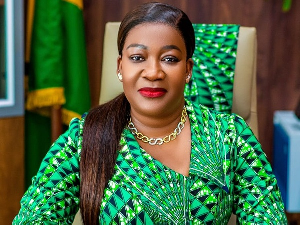 Justina Nelson is the CEO of MIIF