Private legal practitioner, Martin Kpebu, has cautioned against claims that lawyers deliberately made errors in Minority Leader Alexander Afenyo-Markin’s defamation suit against GoldBod CEO Sammy Gyamfi to ensure its dismissal.
The private legal practitioner acknowledged that deliberate procedural mistakes are possible in legal practice but stressed that there was no evidence that the error in Afenyo-Markin’s case was intentional.
“You can’t take that out of the equation. Yes, sometimes mistakes are deliberate,” Kpebu said during a discussion of the court’s decision to dismiss the Ghc15 million lawsuit.
However, he was careful to distinguish the possibility of deliberate errors in general from the facts established in this particular case.
“I’m not saying, and to be very, very clear, we have no evidence and no evidence has been adduced that in this case the error was deliberate,” he said.
Kpebu acknowledged that suspicions sometimes arise when a case is dismissed because of a procedural mistake. He described allegations that lawyers may intentionally mishandle a case so their clients can blame the court as stories that circulate in legal and public discussions.
But he said the existence of such suspicions did not prove that the same thing had happened in Afenyo-Markin’s case.
He also referred to other defamation suits in which lawyers had made similar mistakes, suggesting that procedural errors can occur without necessarily indicating deliberate conduct.
The case followed Sammy Gyamfi’s use of the word “extortionist” to describe Afenyo-Markin during an appearance on JoyNews’ Newsfile programme in August. Afenyo-Markin subsequently sought GH¢15 million in damages and an order restraining further publication of the statement.
The High Court dismissed the suit on procedural grounds. Its ruling did not determine whether the disputed description was defamatory or whether the allegation behind it was true.
General News of Thursday, 15 October 2026
Source: mynewsgh.com
Kpebu warns against conspiracy claims over procedural error in Afenyo-Markin’s suit
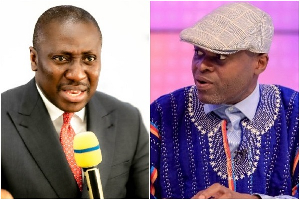 Alexander Afenyo-Markin (L) and Martin Kpebu (R)