In football, every touch matters. A pass must find its target, a first touch must set up the next move, and a change of direction can make the difference between creating a chance and losing possession.
But when the pitch beneath their feet is uneven, bare or waterlogged, even the simplest actions become difficult.
In the Ghana Premier League, poor playing surfaces are more than an eyesore; they shape how players perform, how teams compete and how the game unfolds, raising concerns about the conditions in which Ghanaian footballers are expected to excel.
The problem has come into sharper focus in recent weeks, with concerns raised by figures across the domestic game about the impact of playing surfaces on player development and the quality of football in the league.
Olympic Games Qualifiers: Black Queens thrash Mauritius 7-0
When the pitch limits the player
Former Asante Kotoko head coach Eric Tinkler highlighted the challenge in August 2026, questioning how players could be expected to improve when training and playing on substandard pitches.
“How are you going to improve a footballer on a pitch like this? You are not going to improve him,” Tinkler said, expressing frustration over the conditions available to his team.
His comments point to a problem that extends beyond the outcome of individual matches.
Players need suitable surfaces to sharpen their first touch, improve passing accuracy and develop the technical qualities required to compete at a higher level.
When the ball moves unpredictably, those skills become harder to practise and demonstrate consistently.
Former Black Stars midfielder Emmanuel Agyemang-Badu has also identified poor pitches among the difficulties confronting the Ghana Premier League.
A problem bigger than matchday
The concerns are not limited to the technical demands of the game. Uneven surfaces can affect players’ footing and movement, while waterlogged pitches can disrupt fixtures and make normal play difficult.
Accra Hearts of Oak head coach Nebojša Kapor added his voice to the debate after his side’s 1-0 victory over Port City at the University of Ghana Stadium on October 11, 2026.
Kapor described the lack of quality playing pitches as a serious problem for Ghana football, stressing that improving the game requires attention beyond the performance of individual teams.
Rough Grounds, Ugly Game: The Ghana Premier League’s pitch problem
Inspections are only the beginning
The Ghana Football Association has a venue inspection process intended to ensure stadiums meet minimum requirements.
In February 2025, its Club Licensing Department re-inspected 15 Premier League venues.
Five were fully approved, five received conditional approval, while three were disapproved over technical and security challenges pending repairs and further inspection.
Ahead of the 2026/27 season, the GFA confirmed 14 approved venues following inspections and clearance by its Club Licensing Department.
However, approval to host matches does not, by itself, settle the wider debate about whether pitches consistently offer the conditions players need to develop and perform at their best.
Improving playing surfaces requires sustained investment, effective drainage, suitable grass and regular maintenance.
It also requires clear responsibility for the upkeep of stadiums and consistent monitoring throughout the season.
Ultimately, the quality of the Ghana Premier League depends on more than the talent of its players.
If Ghanaian footballers are to improve their technical ability and the league is to become more competitive, the pitch must become an asset to the game rather than an obstacle they must overcome.
FKA/AM
Sports News of Wednesday, 14 October 2026
Source: www.ghanaweb.com
Rough Grounds, Ugly Game: The Ghana Premier League’s pitch problem
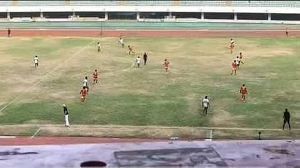 A picture showing what a football pitch looks like in Ghana