78.3% of Ghanaian women aged 15 and above now have an account with a bank or mobile money provider, a significant increase from 27.1% in 2011.
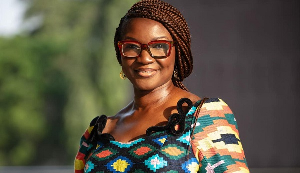
Despite the progress, access to capital remains a major challenge for women and women-owned businesses, Senior Presidential Advisor and Senior Aide to President John Dramani Mahama, Joyce Bawah Mogtari, has said.
Better roads will create sustainable jobs for Ghana’s youth - Joyce Bawah
In a post shared on her social media page on October 8, 2026, following President Mahama’s meeting with Queen Máxima of the Netherlands on the sidelines of the 81st United Nations General Assembly, she said Ghana must move beyond simply increasing the number of women participating in the financial system.
Queen Máxima serves as the UN Secretary-General’s Special Advocate for Inclusive Finance for Development and has advocated greater access to financial services, particularly for women and other groups that have historically faced barriers to finance.
Joyce Bawah said the focus should also be on ensuring that women can access the funding needed to grow their businesses and strengthen their households.
“For Ghana, that conversation must include the future of the Women’s Bank, more affordable lending for women-owned businesses, flexible collateral requirements, access to patient capital, and deliberate support for the growth of women-led industries.
“If we are serious about building inclusive, resilient and prosperous economies, then investing in women cannot be an afterthought. It must be at the heart of our development agenda,” she wrote.
According to her, the growth in account ownership among women represents significant progress, although a gender gap remains.
She said account ownership among men stood at 84.4% in 2024, compared with 78.3% among women.
Joyce Bawah further noted that having a bank or mobile money account was not the same as having access to the capital required to establish, expand or sustain a business.
She cited data from the second quarter of 2026 showing that women and women-owned businesses accounted for 82.8% of secured credit transactions in Ghana but received GH¢3.1 billion in secured credit.
“In the second quarter of 2026, women and women-owned businesses accounted for 82.8% of secured credit transactions in Ghana, yet received only GH¢3.1 billion in secured credit, compared with GH¢19.4 billion advanced to male borrowers and male-owned businesses,” she added.
Joyce Bawah said the figures reinforced the need for deliberate measures to improve women's access to affordable financing and create greater opportunities for women-led businesses.
See the post below:
We are all aware that women remain the backbone of economic growth in many societies, and Ghana is no exception. For this reason, financial inclusion must remain central to our efforts to empower women, strengthen households and build sustainable economies.
— Joyce Bawah Mogtari (@joyce_bawah) October 8, 2026
President John Dramani Mahama has consistently championed this agenda. One of the particularly significant moments on the sidelines of the 81st United Nations General Assembly was his meeting with Her Majesty Queen Máxima of the Netherlands, the UN Secretary-General’s Special Advocate for Inclusive Finance for Development. Queen Máxima has used her unique platform to advance financial inclusion globally, with a particular focus on women, advocating for greater access to finance, stronger institutions, increased investment, and greater transparency and accountability in the way financial systems serve those who have historically been excluded.
The Ghanaian numbers tell us why this conversation matters. In 2024, 78.3% of Ghanaian women aged 15 and above had an account with a bank or mobile money provider, a remarkable increase from 27.1% in 2011. Yet there remains a gender gap, with account ownership among men standing at 84.4%.
More importantly, access to an account is not the same as access to capital. In the second quarter of 2026, women and women-owned businesses accounted for 82.8% of secured credit transactions in Ghana, yet received only GH¢3.1 billion in secured credit, compared with GH¢19.4 billion advanced to male borrowers and male-owned businesses.
The question, therefore, is no longer simply whether women are participating in the financial system. It is whether the financial system is giving women the capital, terms and opportunities they need to grow.
That is why the meeting between President Mahama and Queen Máxima was so significant. It brought together two strong voices around a shared question: how do we build financial systems that work better for women and, in doing so, unlock their full economic potential?
For Ghana, that conversation must include the future of the Women’s Bank, more affordable lending for women-owned businesses, flexible collateral requirements, access to patient capital, and deliberate support for the growth of women-led industries.
If we are serious about building inclusive, resilient and prosperous economies, then investing in women cannot be an afterthought. It must be at the heart of our development agenda.
#actanonverba
JKB/VPO
THE LOWDOWN: GES PRO Speaks on SHS Placement Crisis and Teachers’ Strike