Managing Editor of the Insight Newspaper, Kwesi Pratt Jnr, has questioned the potential benefits Ghana could derive from joining the BRICS bloc, saying he is uncertain whether membership would provide the country with significant financial or economic gains.
According to him, Ghana could still face limitations in accessing financial assistance even after joining the bloc, particularly if such support requires approval through mechanisms involving the International Monetary Fund (IMF) and World Bank.
“I’m not so sure what the benefits of joining BRICS now may be. I’m not sure at all,” Pratt stated on Metro TV's Good Morning Ghana on October 7, 2026.
Ghana to formally apply to join BRICS – Ablakwa
The veteran media practitioner also questioned whether Ghana would be able to secure the endorsement of all the existing member states before joining the bloc.
“I’m not even sure if Ghana can join BRICS at this stage. I’m not sure if we can get the endorsement of all five member states of BRICS to join it,” he said.
He argued that even if Ghana succeeds in joining BRICS and seeks financial assistance from the bloc, the country could still encounter approval requirements that limit the extent of support it can receive.
“Even if you join BRICS and we're seeking some financial assistance and so on, the very fact that we have to go through approval mechanisms which require the endorsement of the World Bank and IMF is problematic for us,” he said.
Pratt also pointed to Ghana’s relationship with South Africa as another factor that could affect the country’s prospects within BRICS.
He said relations between the two countries had deteriorated in recent times, particularly over the issue of xenophobia.
Pratt further indicated that the relationship between Ghana and South Africa was therefore “not the best”, although he did not believe South Africa would necessarily block Ghana’s potential membership of BRICS.
He cited efforts by South African President Cyril Ramaphosa to improve relations between the two countries, including the dispatch of a special envoy to Accra.
“President Ramaphosa actually sent his special envoy to Accra to try and paper over the conflicts with Ghana and so on,” he said.
According to him, South Africa remains interested in improving its relationship with Ghana, but he said developments within South Africa’s domestic politics could also affect the country’s influence.
He pointed to tensions between the African National Congress (ANC) and the South African Communist Party (SACP), saying the alliance between the two appeared to have broken down.
“The Communist Party of South Africa has now decided to contest the next elections on its own. I mean, that’s huge,” he said.
Pratt said the political situation in South Africa was becoming increasingly difficult for the ANC, with speculation about whether it could remain in power for much longer.
He also mentioned tensions involving the Congress of South African Trade Unions (COSATU), saying further changes within the ANC’s traditional alliances could worsen the situation.
Against this background, Pratt questioned whether South Africa’s presence within BRICS could guarantee Ghana any tangible benefits.
“South Africa's presence on BRICS may not be able to guarantee anything for Ghana,” he said.
He therefore maintained that the key question for Ghana should be what practical benefits membership of BRICS would bring, particularly at a time when the country continues to rely on international financial institutions for support.
His comments follow the announcement by the Minister of Foreign Affairs, Samuel Okudzeto Ablakwa, that the government has decided to formally apply for Ghana to join BRICS, a major intergovernmental organisation made up of the emerging national economies of Brazil, Russia, India, China, and South Africa.
Ablakwa said the decision is aimed at diversifying Ghana’s international partnerships, expanding economic opportunities and strengthening cooperation with countries in the Global South.
JKB/VPO
How a Visit to GHACEM Inspired Ibrahim Mahama to Build Dzata Cement
General News of Wednesday, 7 October 2026
Source: www.ghanaweb.com
Kwesi Pratt questions what Ghana stands to gain from joining BRICS
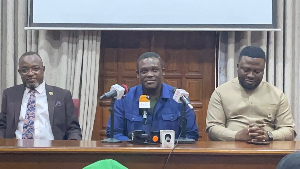
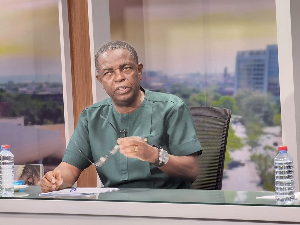 Kwesi Pratt Jnr is Managing Editor of the Insight Newspaper



Entertainment