A living room can quickly become cluttered without you even realising it. Items that are temporarily placed there often become permanent fixtures, while things that once seemed useful may simply be taking up valuable space.
Professional organisers say several everyday items commonly found in living rooms do not actually belong there and can make the space feel untidy and overwhelming.
Here are some of the things experts recommend removing or relocating:
Bags, coats and shoes
Bags, coats and shoes are among the most common items that end up in living rooms simply because they are convenient to leave there.
Professional organiser Emma Kenwrick-Meehan, founder of Home Nip & Tuck, said these items often become permanent fixtures when they do not have a clearly designated storage space.
Creating a convenient coat rack or shoe rack near the entrance can help prevent them from occupying space in the living room.
Too many children's toys
For households with children, toys can easily spread from bedrooms and play areas into the living room.
Jo Jacob, a professional organiser and owner of Benella Home Organisation, said keeping every toy in the living room can create unnecessary chaos.
Less clutter, more space…..
She recommends rotating toys and storing them in a large hamper or another multipurpose storage item so they can be tidied away easily.
Old magazines
Old magazines can occupy coffee tables and other surfaces for months because people intend to read them later.
According to Jacob, people often keep magazines for particular articles but rarely return to them.
Instead of keeping entire magazines, she recommends removing the pages or articles worth saving and organising them in a folder. This can free up valuable surface space while keeping useful information accessible.
Returns, donations and items waiting to leave the house
Packages, gifts, donations and items meant to be returned or taken elsewhere often find their way into the living room.
Kenwrick-Meehan said these items may not take up much space individually, but together they can make the room feel like it is full of unfinished tasks.
Creating a dedicated 'outgoing' area near the front door, in a hallway cupboard or utility room can keep these items together and out of the living room.
Old remote controls
Old remotes and accessories for devices that are no longer in use are another source of unnecessary clutter.
Jacob said she regularly finds drawers filled with remotes for electronics that people no longer own.
If you no longer have the television, sound system or other device a remote belongs to, it may be time to get rid of it rather than allowing it to occupy valuable storage space.
Unused cables and chargers
Tangled wires, unidentified cables and old chargers can quickly make an entertainment area look messy.
Why do you want to build a congregation of 20,000? - Duncan-Williams ‘confronts’ young pastor
Jacob noted that many households have collections of cables that nobody can identify.
Checking behind the television or entertainment centre can reveal cables that are no longer connected to anything. Removing those that are obsolete can immediately make the area look neater.
Exercise equipment
A yoga mat or a small piece of exercise equipment may not seem out of place in a living room, particularly if it is regularly used there.
However, Jacob warned that multiple weights and fitness gadgets can quickly make the space resemble a gym.
Keeping exercise equipment in a designated cupboard, bedroom or storage area can help maintain the living room as a space for relaxation.
Paperwork
Bills, letters, forms and other paperwork are another major source of clutter.
Kenwrick-Meehan said paperwork often accumulates because people leave it somewhere visible so they will remember to deal with it.
However, documents left on tables for days or weeks can eventually become nothing more than clutter.
A dedicated tray, folder or basket for incoming paperwork can help keep documents organised. They can then be sorted regularly, with important papers filed and unnecessary ones discarded.
Too many throws and cushions
Throws and cushions can add warmth and comfort to a living room, but having too many can make the space feel overcrowded.
Jacob said a few cushions and throws can create comfort, while excessive amounts can make everyday tidying more difficult.
Reducing the number of blankets and cushions left around the room can create more open space without requiring a complete change to the décor.
One of the biggest causes of clutter is keeping things in the living room simply because there is nowhere else to put them.
The experts' advice points to a simple principle: everything should have a designated home.
When bags, paperwork, toys, cables and other items are repeatedly left in the living room, the problem may not be the room itself but the lack of convenient storage elsewhere.
Creating specific places for these belongings can make it easier to keep the living room clear and maintain it as a space for relaxation and socialising.
MRA/VPO
Inside Ghana’s Abandoned Engineering Powerhouse: What Went Wrong?
General News of Wednesday, 30 September 2026
Source: www.ghanaweb.com
9 things to remove from your living room to make it look less cluttered
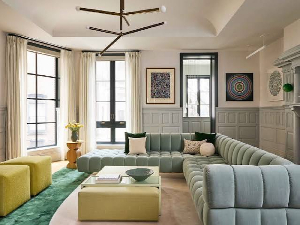 File photo of a living room