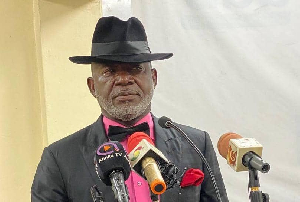
Ghanaian lawyer Martin Kpebu has rejected the argument that Speaker of Parliament Alban Bagbin’s May 2026 comments cleared law enforcement agencies to bypass Parliament when dealing with MPs.
Kpebu was responding to a question from TV3’s Keypoints host Alfred Ocansey about the controversy surrounding the attempted arrest of Manhyia South MP Nana Agyei Baffour Awuah by EOCO at the Accra High Court on September 23.
Ocansey reminded him that Bagbin had earlier stated that security agencies did not need his permission before arresting or inviting an MP for questioning.
Bagbin made the comments in Parliament on May 21, 2026, saying security agencies were required to inform his office about such action rather than seek his permission beforehand.
Asked whether that position changed anything in the Baffour Awuah matter, Kpebu was direct.
“It doesn’t at all,” he said. Kpebu suggested that the reported statement was being interpreted too broadly.
“At this stage I would think that is a misreportage,” he told Ocansey. He said Bagbin’s statement should not be read as cancelling the constitutional provisions governing parliamentary privileges.
“As I’ve said, I’ve read to you section 20. It doesn’t lie in the bosom of the Speaker to cancel section 20,” Kpebu said.
He then drew a distinction between an MP being protected from an arrest in every circumstance and the procedures that apply when law enforcement seeks to act against a sitting legislator.
Kpebu referred to Order 25 of Parliament’s Standing Orders, arguing that the provision concerning notification of the Speaker after an MP is arrested should be read together with the other legal protections rather than used to cancel them.
He gave an extreme example to make his point. “If Professor Jumpo is the MP, touches that wood, pulls his pistol out and shoots somebody, we can’t say Jumpo should walk home because he’s an MP,” Kpebu said.
“No. We’ve seen it. This is death. That one will lead to too much impunity.”
His point, he explained, was that parliamentary protection could not reasonably be interpreted to prevent immediate action where an MP was caught committing a serious offence.
“That’s when the notification will apply,” he said.
Kpebu therefore argued that the law should be read as a whole rather than using one provision to override another.
“You don’t read one law to cancel the other,” he said. The issue has become particularly relevant because EOCO says Baffour Awuah had previously been invited twice in February to assist with an investigation but did not honour the invitations.
“Baffour Awuah’s own account, however, says a February 10 letter was addressed to the senior partner of his law firm and that he responded on February 18, informing EOCO that he had become an MP and had referred the letter to the Clerk to Parliament for advice.
Kpebu said that distinction mattered in assessing the events at the High Court.
For him, the question was not whether an MP could ever be arrested. It was whether authorities had followed the appropriate parliamentary procedure before attempting to take Baffour Awuah into custody.
“If the application had gone to the Speaker and the Speaker had ruled that he would not make him available, then that’s the point at which absoluteness or otherwise will arise,” he said.
The 1992 Constitution provides that civil or criminal process from outside Parliament shall not be served on or executed against the Speaker, an MP or the Clerk while that person is on the way to, attending or returning from parliamentary proceedings.
Bagbin’s May statement, meanwhile, specifically addressed the misconception that security agencies needed his prior permission before arresting or inviting MPs.
He said his office was to be informed of the circumstances and allegations involved, after which the issue of parliamentary privilege or immunity could be considered.
General News of Monday, 28 September 2026
Source: mynewsgh.com
Bagbin's statement on arresting MPs does not cancel parliamentary protections – Kpebu
 Martin Kpebu is a lawyer in Ghana