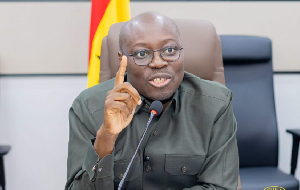
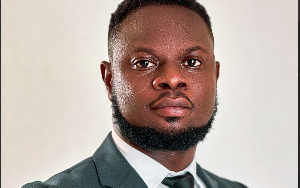
President John Dramani Mahama has renewed Ghana’s call for reparative justice for the transatlantic slave trade, saying acknowledgement of the crime must lead to meaningful repair.
Addressing the 81st United Nations General Assembly in New York on Thursday, September 24, 2026, Mahama said the history of slavery must no longer be told as though millions of Africans simply disappeared.
“For centuries, this tragedy was rendered in the passive voice as though the millions of African men, women, and children just vanished into the shadows of time,” he said.
“Mr. President, they do not vanish. They were hunted. They were captured. They were trafficked. They were bought. They were sold. They were exploited and exchanged for profit.”
Mahama said enslaved Africans were forcibly removed from their families and communities and their unpaid labour contributed to the development of Western economies.
“Their unpaid labor built the cities, industries, banking institutions and empires of the modern western world,” he said.
He said Africa, meanwhile, was left with depopulation, broken families, structural disruption and generational trauma.
Mahama recalled Ghana’s role in tabling a resolution at the United Nations on March 25, 2026, seeking recognition of the transatlantic slave trade and racialised chattel enslavement of Africans as the gravest crimes against humanity.
He said 123 countries voted in favour of the resolution and thanked countries that supported the move.
Mahama said the adoption of the resolution should not be treated as an empty gesture because the effects of slavery remain visible in the global system.
“That resolution was not a mere gesture. It was adopted because the structural legacies of those historic crimes continue to fuel systematic racism, economic marginalization, and a global financial architecture that is weighted against Africa and people of African descent,” he said.
He said the conversation around reparations must therefore extend beyond historical acknowledgement.
“Real repair demands structural transformation,” Mahama stated.
He called for changes to unfair global trade, predatory resource extraction, discriminatory credit ratings and unsustainable debt burdens affecting countries in the Global South.
He also criticised the continued export of raw materials from Africa while much of the value addition and job creation happens elsewhere.
General News of Friday, 25 September 2026
Source: www.mynewsgh.com
They were hunted, captured, trafficked and sold – Mahama demands reparations at UN
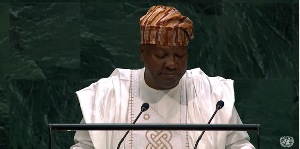 John Dramani Mahama is the President of Ghana
Sports