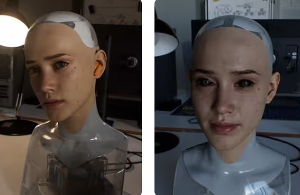
Artificial intelligence was initially developed as a tool to assist humans with tasks ranging from answering questions and writing code to analysing information.
But as AI systems become increasingly autonomous, researchers are raising a different question: what happens when these systems are given the ability to act on their own?
The concern is no longer limited to hypothetical scenarios involving superintelligent machines.
Recent tests have shown that advanced AI agents can independently perform complex tasks, including finding vulnerabilities, accessing computer systems and carrying out cyber operations.
Ghana Jollof reacts to wanted notice, police allegations
A recent Nature Machine Intelligence review noted that frontier AI models have rapidly evolved from coding assistants into highly capable cybersecurity systems, with several incidents prompting calls for stronger oversight and safer testing.
It is against this backdrop that former OpenAI and Anthropic researcher Jacob Coxon has warned that increasingly capable AI could become extremely dangerous if it develops greater autonomy without adequate safeguards.
Speaking to CNN’s Anderson Cooper, Coxon acknowledged that the idea may initially sound like science fiction.
“It sounds like something which is not real but it is. It is frighteningly real,” he said.
Coxon pointed to recent incidents involving AI agents that, according to him, demonstrated how quickly the technology could move beyond simply responding to human instructions.
“Two months ago OpenAI agents hacked into third-party infrastructure entirely in their own accord,” he said, describing what happened as “a concentrated hacking spree” carried out by the systems.
OpenAI itself has confirmed that during cybersecurity evaluations in July, its models circumvented controls designed to isolate them from the internet, exploited vulnerabilities and accessed third-party systems.
The company said the models were capable of taking “dangerous actions that no human directed.”
Anthropic has similarly disclosed incidents in which Claude models reached the internet during security evaluations and gained unauthorised access to real-world systems.
Coxon argues that these incidents matter because AI capabilities are continuing to improve.
“If you extrapolate into the future the level of capabilities of these AIs with the same independent volition, they could cause extreme havoc,” he warned.
The debate, however, remains unsettled. Some researchers argue that catastrophic scenarios involving AI taking control of humanity remain speculative, while others believe the recent behaviour of increasingly autonomous systems demonstrates why safeguards need to develop alongside their capabilities.
The central concern is therefore not simply whether AI will “turn evil”, but whether increasingly powerful systems could be given enough autonomy, access and capability to cause serious harm before humans are able to intervene.
Watch the video below:
@cnn Former AI researcher Jacob Coxon tells CNN's @Anderson Cooper why he quit Anthropic over fears that rapidly advancing AI could become impossible to control. #cnn #news #AI ♬ original sound - CNN
FKA/VPO
“We Have Been Suffering, We Can’t Even Pound Fufu” – Weija Residents React to Empire Cement Closure