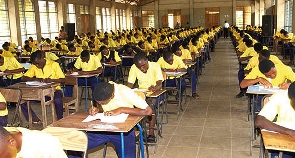
In recent weeks, Ghana’s education system has come under intense public scrutiny following the annual school placement exercise.
Parents and their wards, fresh from completing the 2026 Basic Education Certificate Examination (BECE), have voiced frustrations over placements, insisting that the grades their children attained should guarantee admission into certain institutions, particularly those classified as Category A schools.
But what do Category A, B and C schools mean?
The Ghana Education Service (GES), through the Computerised School Selection and Placement System (CSSPS), groups senior high schools into categories to manage demand and ensure fairness.
Category A schools are generally regarded as the most prestigious institutions, often with long histories, strong academic records and extensive facilities. They are highly competitive, with limited vacancies. Examples include Achimota School, Wesley Girls’ SHS, PRESEC-Legon and Prempeh College.
CSSPS 2026/2027: Education Ministry reveals date for release of school placement results
Category B schools represent the second tier. They maintain good academic outcomes and facilities, although not necessarily on the same scale as Category A schools. Many offer both day and boarding options, providing solid programmes for students.
Category C schools provide more accessible alternatives. They may have fewer facilities or lower demand but still offer accredited programmes. For many students, these schools are closer to home and provide opportunities for academic and personal development.
Why the categories have sparked debate
The categorisation has become a source of tension because many parents equate Category A schools with prestige and future success. As a result, students with strong BECE grades may feel entitled to placement in these institutions.
When placements assign them to Category B or C schools, frustration can arise, with some parents alleging unfairness and bias in the system.
Critics and education experts, however, argue that this perception undermines the value of other schools, many of which produce excellent results and nurture talent across diverse fields.
They stress that the categories are administrative groupings and should not be interpreted as rankings of teaching quality.
Arguments from parents and students
Parents have taken their grievances to the Education Ministry, the Ghana National Association of Teachers Hall and social media platforms to express dissatisfaction.
Some insist that their wards’ grades should automatically secure Category A placements, while others have questioned the transparency of the CSSPS process.
Students themselves have shared mixed emotions, celebrating their achievements while expressing disappointment when their preferred schools remain out of reach.
Education Ministry explains why many BECE candidates missed Category A schools
The Education Ministry has attributed some of the challenges surrounding the 2026 Computerised School Selection and Placement System (CSSPS) to the overwhelming demand for Category A senior high schools.
According to the Ministry, more than four times as many candidates who selected Category A schools as their first choice were competing for the available spaces in those institutions.
Speaking on JoyNews’ The Pulse on Monday, September 7, 2026, Press Secretary to the Minister for Education, Hashmin Mohammed, explained that the issue was not a shortage of vacancies across the country but rather the concentration of candidates around a relatively small number of highly sought-after schools.
'Who is manipulating who?' – MzGee questions CSSPS placement system
He said the CSSPS had declared 859,828 vacancies across schools nationwide, a figure significantly higher than the number of candidates who sat for the Basic Education Certificate Examination (BECE).
“The system, the CSSPS system declared a vacancy of 859,828. So if you look at the vacancy in the system, it is even far more than the number of candidates who sat for the exams,” he said.
“So, when you are faced with that challenge, of course, some students will not be able to be placed in their preferred school,” he added.
What education analysts have said
Education analysts advise families to balance ambition with realistic choices. By selecting a mix of Category A, B and C schools during the placement process, students can increase their chances of securing admission while avoiding disappointment.
The broader lesson, they argue, is that success is not limited to Category A institutions. Many Category B and C schools have produced leaders, professionals and innovators.
Ultimately, the debate over Category A, B and C schools reflects deeper perceptions about prestige and opportunity in Ghana’s education system.
While parents and students often equate Category A with success, the reality is that excellence can be nurtured in every category.
As the brouhaha over BECE placements continues, the challenge for policymakers, educators and families is to shift the focus from labels to the quality of teaching, mentorship and resources that truly shape the future of students.
VKB/MA
“I’m a Single Mother, I Sell Pure Water to Care for Him” – Woman Cries Over Son’s School Placement
General News of Monday, 14 September 2026
Source: www.ghanaweb.com