Minority Leader Alexander Afenyo-Markin has urged the government to undertake major reforms at the Electricity Company of Ghana (ECG), warning that high electricity costs could undermine the success of its 24-hour economy policy.
The Effutu MP said businesses could not be expected to operate for longer hours and expand production if they continued to struggle with expensive and unreliable electricity.
Afenyo-Markin backs 24-Hour Economy and Big Push policies
He said the government must address longstanding challenges in the power sector, including revenue leakages, illegal connections and the failure of some consumers to pay their electricity bills.
Afenyo-Markin made the comments when cultural troupes from Winneba visited him at his residence on Monday, August 31, 2026.
According to him, repeatedly increasing electricity tariffs to compensate for inefficiencies within ECG would only put additional pressure on households and businesses.
“They would have to look at the power sector critically and reform that place. Some reforms started; they should pursue them,” he said.
The Minority Leader said illegal connections and non-payment of electricity bills remained major challenges affecting the financial health of the power distributor.
“Many people don’t pay for electricity they consume. There are a lot of illegal connections widespread. I think that it is one area where they have an opportunity to fix it,” he said.
He cautioned the government against making tariff increases the main solution to ECG’s financial difficulties.
Afenyo-Markin argued that continued increases in electricity tariffs could raise operating costs for businesses and discourage potential investors.
“Otherwise, you see, we’ll continue to say increase the tariff, increase the tariff, but that will not be the solution. The government must be bold to fix the problems,” he said.
The Minority Leader said affordable and reliable electricity would be critical to the success of the government’s 24-hour economy initiative.
He explained that businesses would need dependable power and lower operating costs if they were to work longer hours, increase production and create more jobs.
However, Afenyo-Markin questioned whether the government had put the necessary structures in place to make the policy work in practice.
He warned that announcing an ambitious policy would not automatically translate into benefits for Ghanaians unless the practical challenges facing businesses were addressed.
“If you have a beautiful idea and you don’t put in the guardrails to ensure that implementation benefits the people, I’m sorry, you will fail,” he said.
He therefore urged the government to build on reforms started by the previous administration instead of abandoning them, particularly measures aimed at improving efficiency in the power sector.
Afenyo-Markin also criticised what he described as excessive bureaucracy surrounding the implementation of the 24-hour economy programme.
He said the government must focus less on policy rhetoric and more on creating the conditions businesses need to operate effectively around the clock.
“Beyond the big English, what are the supporting pillars in place for successful implementation?” he asked.
He maintained that fixing ECG, reducing the cost of electricity and ensuring a reliable power supply must be among the key foundations for making the government’s 24-hour economy agenda a reality.
NA/MA
EU Ambassador raises concern over political polarization in Ghana's media
General News of Tuesday, 1 September 2026
Source: www.ghanaweb.com
Fix power sector before 24-hour economy rollout – Afenyo-Markin
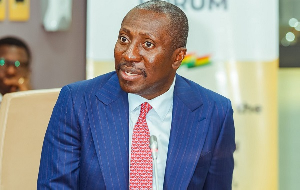 Alexander Afenyo-Markin is the Minority Leader