A company reportedly owned by a former IT officer of Ghana’s Embassy in the United States received nearly $296,000 for renovation and furnishing works at the ambassador’s residence, according to a forensic audit report.
According to a report by Manasseh Azure Awuni’s pacgh.org, the company, Stefrann LLC, owned by Fred Kwarteng, received two payments from the embassy: $159,043.84 in February 2019 and $136,864 in June 2020.
How Ghana Embassy staff allegedly shared $19.4m extorted from applicants - Report
The payments were flagged as a potential conflict of interest because Kwarteng was reportedly an employee of the embassy at the time.
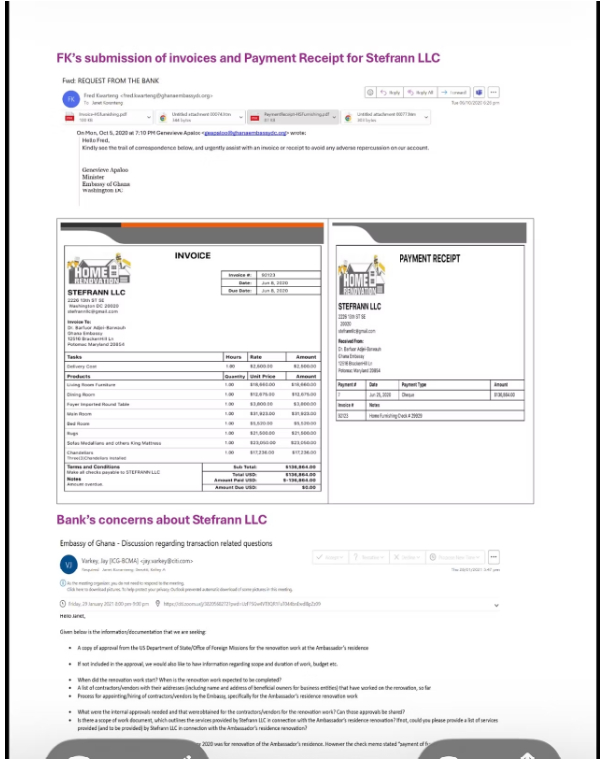
The report further disclosed that the then Chief Treasury Officer, Janet Maku Koranteng, confirmed to the auditors that Fred Kwarteng owned the company.
The embassy’s banker in the United States, Citibank, also raised concerns about the transactions, citing questionable invoices, inconsistencies in the company details, and the fact that an embassy staff member was benefiting from payments made by the mission.
According to the audit report, Citibank queried the transactions “due to questionable invoices, inconsistencies in company details, and the conflict of interest arising from a staff member being the beneficiary of Embassy payments.”
The auditors concluded that the transaction did not meet the requirements of the Public Financial Management Act, 2016 (Act 921), which requires public officials responsible for state resources to ensure that public funds are protected and financial transactions are properly authorised and documented.
The report also cited the Foreign Service Regulations, 2019, which prohibit officials serving at Ghanaian diplomatic missions from engaging in transactions that create conflicts of interest.
Despite the concerns raised by Citibank, the embassy proceeded with the payments, according to the report.
Citibank had also requested supporting documents relating to the renovation project before the transactions were processed.
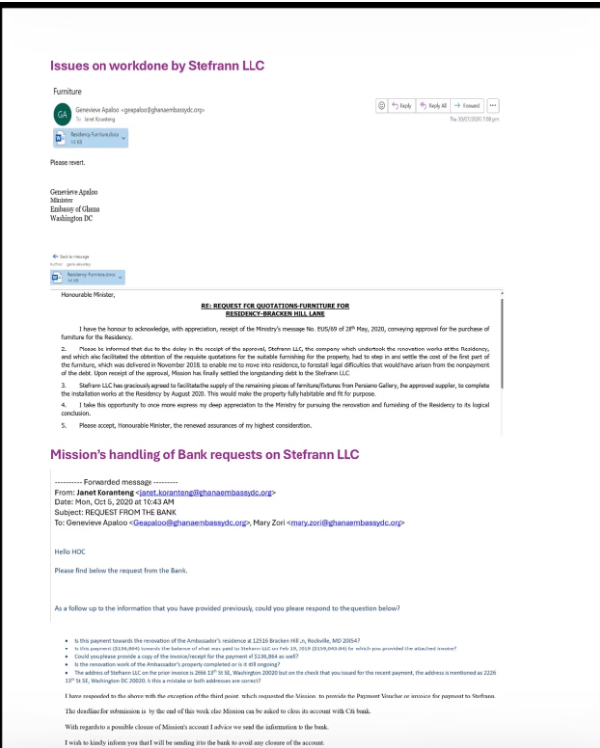
The audit report said a bank official, Jay Varkey, asked the embassy to provide a copy of the US State Department’s approval for the renovation, details of the work and budget, information on the contractors and vendors involved, and evidence of internal approvals.
He also questioned a payment made to Stefrann LLC after the cheque memo described it as “payment of furniture for residency.”
Varkey asked the embassy to clarify whether the furniture had been purchased through Stefrann LLC or Persiano Furniture Gallery.
He further sought clarification on whether Persiano Furniture Gallery had been fully paid and whether the payment was made directly to the company or through Stefrann LLC.
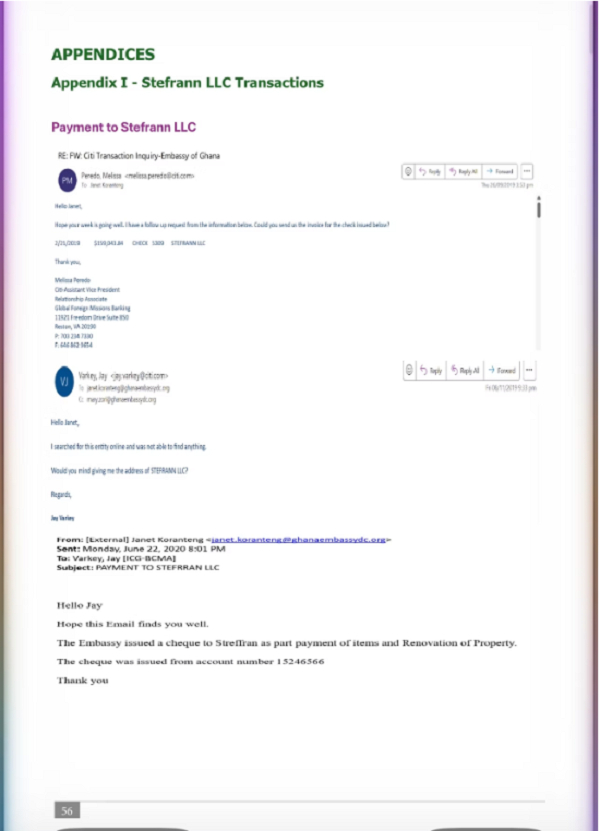
The auditors also conducted checks on the company and identified another discrepancy. Their search found companies registered as STEFRAN LLC, but not STEFRANN LLC, the name under which the embassy made the payments.
Meanwhile, the Auditor-General has recommended the recovery of the amount from the key actors involved in the transaction.
The audit also recommended stronger due diligence on vendors, particularly for high-value contracts, including verification of ownership and beneficial ownership, as well as checks for sanctions and politically exposed persons.
Kwarteng’s role at the embassy
Fred Kwarteng served as the embassy’s ICT officer from November 2016 until his dismissal in May 2025.
During his tenure, he reportedly had operational control over the mission’s digital platforms, including the embassy’s website, online visa and passport application systems, and payment gateway integrations.
The audit report also linked him to external platforms, including TravelGhana.Net and GhanaPV.org, as well as companies such as Ghana Travel Consult, Secure Data Centre LLC, Travel Global and MFG Technology.
According to the report, some of these platforms were connected to the embassy’s official systems or designed in ways that could make them appear to be government-authorised.
Applicants were allegedly redirected from the embassy’s official website to some of the platforms and required to make payments through them.
The auditors said some of the platforms also used official symbols and presentation styles that could give users the impression that they had government approval.
The report further stated that Kwarteng was involved in linking unauthorised websites to the embassy’s official website, with visa and passport applicants allegedly being charged unapproved fees above the official rates.
Ghana Embassy in US Saga: Auditors drop hints on possible alteration of digital records
The audit report was quoted as saying that the ethical standards governing the Ghana Foreign Service prohibit employees, contractors and agents from using embassy platforms, symbols or imagery—including the Coat of Arms of Ghana in ways that create the impression of official endorsement for private commercial activities or result in personal financial enrichment.
The Auditor-General has subsequently recommended measures to strengthen oversight of vendors and prevent potential conflicts of interest in Ghana’s diplomatic missions.
MAG/MA
Politicians who steal millions should not think they are above goat thieves - Mahama Ayariga
Business News of Tuesday, 1 September 2026
Source: www.ghanaweb.com
US bank flagged payments linked to Ghana ambassador's residence renovation
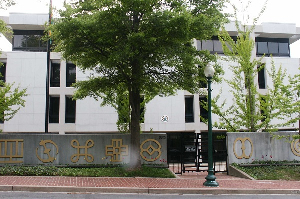 A picture showing the front view of Ghana Embassy in Washington DC







Opinions