The Tema Oil Refinery (TOR) has resumed crude oil refining operations following extensive restoration efforts, marking a significant step in the revival of Ghana’s downstream petroleum sector.
Since restarting production in December 2025, TOR has processed 2,468,682 barrels of crude oil, producing high-grade petroleum products for the Ghanaian market.
During the period, the refinery generated 382,946,945 litres of petroleum products, of which 262,151,895 litres of liquid petroleum products and 800,000 kilogrammes of Liquefied Petroleum Gas (LPG) have been commercialised.
Petrol, diesel and LPG prices projected to rise from September 1
Leading petroleum market players, including state-owned GOIL and regional distributor SONABHY, have emerged among the refinery’s major off-takers.
The latest operational milestones reinforce TOR’s more than six-decade legacy of refining and quality assurance.
For over 60 years, the refinery has maintained product standards that it says consistently meet international benchmarks as well as specifications established by the African Refiners and Distributors Association.
Reflecting its longstanding reputation for quality, TOR also holds the rare historical distinction of having supplied fuel for Air Force One during three separate official visits by US presidents Bill Clinton, George W. Bush and Barack Obama to Ghana.
To maintain these standards, TOR subjects finished petroleum products to rigorous laboratory testing immediately after they are transferred from the refinery’s battery limits into storage tanks.
Each batch is tested and certified against the applicable specifications before being released onto the market.
“Only laboratory analysis can determine product quality, and that is what we do every day,” TOR’s Quality Control Manager, Emmanuel Abankwah, said.
He explained that TOR’s internal quality-control processes are complemented by oversight from external regulatory bodies, including the National Petroleum Authority (NPA) and representatives of Oil Marketing Companies (OMCs).
“When they are loading the trucks, we have a rep of NPA, OMCs there. After loading of the truck, they climb the truck and check physically, after which the trucks are sealed, then it leaves the refinery,” he explained.
Regulatory teams also take independent samples for third-party verification as part of the process to clear, load and seal each Bulk Road Vehicle (BRV) before it leaves the refinery for market distribution.
According to TOR, the multi-layered quality assurance framework ensures strict accountability for product integrity until the vehicles leave the refinery’s premises.
The refinery said the measures are intended to preserve its historic commitment to product quality as it continues its operational recovery and contribution to Ghana’s downstream petroleum industry.
ANAS/MA
Business News of Monday, 31 August 2026
Source: www.ghanaweb.com
TOR processes over 2.4 million barrels of crude since December 2025 restart
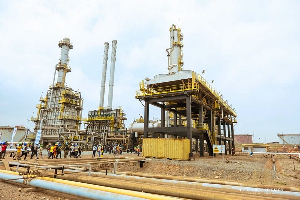 A file photo of the Tema Oil Refinery hub




Entertainment