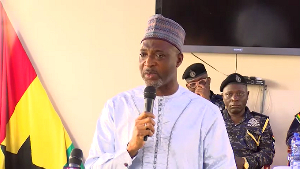
Awal Mohammed has defended the Minority’s decision to walk out of Parliament’s Appointments Committee, arguing that such a move is a legitimate way for an opposition caucus to register its disagreement and shape public opinion.
Speaking during a panel discussion on Joy Prime, Awal said a parliamentary walkout serves both to protest a decision and to draw public attention to the reasons behind the protest.
“A parliamentary walkout is a process to press from two things. One is for people to really understand that you disagree with what the government has done. Again, to really let the media also carry all this for people to understand that indeed these are the reasons,” he said.
His comments followed the Minority Caucus’ walkout on August 27, 2026, during the vetting of three Supreme Court nominees. The caucus, led by Minority Leader Alexander Afenyo-Markin, objected to what it described as a rushed process.
The Minority argued that the vetting, held just three days after the nominees were referred to the Appointments Committee, breached parliamentary practice and denied the public the traditional 14-day period to scrutinise the nominees.
The committee chairman, Bernard Ahiafor, rejected the objection as baseless and allowed the vetting to continue with the Majority side.
Awal said he saw nothing wrong with the Minority’s decision to leave the process, describing parliamentary walkouts as a standard practice used in other jurisdictions.
“I do not see anything wrong with the walkout. I get that. So that is why I am for the walkout if you think it will not serve your interest,” he stated.
He acknowledged that the walkout would not immediately change the outcome of the vetting or approval process, but argued that its impact could extend beyond the parliamentary proceedings.
“In politics, you shape public opinion. Whatever you do, I’m saying that whatever you do, we are there to serve,” he said.
Awal maintained that voters could eventually judge the Minority’s position based on whether they believe its concerns were justified.
“You may not see the outcome today, but in the long run, you see it even in elections,” he added.
General News of Sunday, 30 August 2026
Source: mynewsgh.com
Parliamentary walkout is a legitimate way to shape public opinion - Awal Mohammed
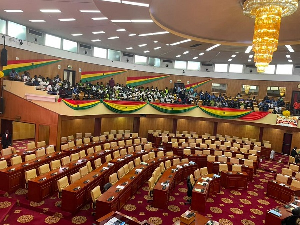 MPs in parliamentary chamber