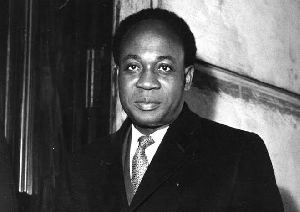
Dr Gideon Boako, Deputy Ranking Member on Parliament's Finance Committee and Member of Parliament for Tano North constituency, has rejected claims that the previous government was not subject to an $80 million monthly cap on foreign exchange intervention under Ghana’s IMF programme.
In a Facebook post on August 28, 2026, Dr Boako said attempts by some government and National Democratic Congress (NDC) communicators to challenge Dr Bawumia’s account were based on what he described as a fundamental misunderstanding of monetary policy and the various foreign exchange operations undertaken by the Bank of Ghana.
Dr Boako said the reference to about $3 billion in foreign exchange sales contained in the IMF’s Fourth Review of Ghana’s Extended Credit Facility (ECF) programme could not be used to conclude that the Bank of Ghana was permitted to intervene in the market by an average of $250 million every month.
“The facts are as follows,” Dr Boako said.
According to him, there was an agreed monthly intervention ceiling which initially stood at $80 million before being reduced to $60 million as Ghana worked to rebuild its international reserves under the IMF programme.
“There was an agreed intervention cap, scaling down from $80m to $60m,” Dr Boako said.
He said the intervention limit formed part of the programme conditionalities agreed between the IMF and the Bank of Ghana as Ghana sought to rebuild its international reserves to agreed thresholds.
“As part of the program conditionalities to rebuild Ghana’s international reserves to agreed thresholds, the IMF and the Bank of Ghana agreed on a strict monthly budget for direct FX intervention capped at $80 million and subsequently scaled down to $60 million,” he said.
Dr Boako said the previous government complied with the agreed restriction and argued that the country’s subsequent reserve performance demonstrated the effectiveness of the policy.
“The previous government adhered strictly to this,” he said.
“It is because of that discipline that by end-2024, Ghana had exceeded the reserve build-up target required by the IMF,” Dr Boako added.
He said Ghana’s performance in rebuilding its reserves subsequently gave the IMF the confidence to relax the restriction and permit greater intervention by the current administration.
“That overperformance is what gave the IMF the comfort to relax the cap and allow the current government to intervene beyond the $80m/$60m limit,” he said.
Dr Boako also explained why, in his view, the intervention ceiling may not be found explicitly in publicly available IMF programme documents.
He said information relating to specific foreign exchange intervention limits could be considered market-sensitive because public disclosure of such restrictions could influence market behaviour and create opportunities for speculation against the cedi.
“Market-sensitive details are redacted from IMF publications,” Dr Boako said.
“As is standard practice in all IMF negotiations, information on intervention caps is market-sensitive,” he added.
Dr Boako argued that if market participants knew that the central bank was restricted to a specific intervention ceiling, that information could potentially be exploited by speculators.
“If the market were to know that the central bank could not intervene beyond $80 million, it would create speculative attacks against the cedi,” he said.
He therefore said figures relating to such arrangements could be redacted when agreements are presented to the IMF Board for publication.
“For that reason, when agreements are presented to the IMF Board, such figures are redacted before publication,” Dr Boako said.
He cautioned against interpreting the absence of the $80 million figure in a published IMF staff report as evidence that no such restriction existed.
“You will therefore not find the cap explicitly stated in the published staff report. Its absence in the report does not mean it did not exist,” he said.
Dr Boako further challenged the interpretation of the approximately $3 billion foreign exchange sales figure cited by critics of Dr Bawumia’s position.
He said the figure represented different foreign exchange operations by the Bank of Ghana and should not be treated exclusively as discretionary intervention in the foreign exchange market.
“The $3 billion figure confuses FX Auction with FX Intervention,” Dr Boako said.
According to him, the Bank of Ghana operates separate foreign exchange windows, including an auction budget and an intervention budget.
“Those citing the $3 billion are confusing two different BoG operations,” he said.
“The Bank of Ghana operates both an Auction budget and an Intervention budget,” Dr Boako added.
He explained that the two operations have different purposes and mechanisms.
“Both together make up the total FX sales figure reported,” he said.
Dr Boako said the foreign exchange auction is a rules-based process that is announced in advance, while direct intervention is discretionary and is undertaken by the central bank to manage volatility in the foreign exchange market.
“FX Auction is pre-announced and rules-based. FX Intervention is discretionary and used to smooth volatility. They are not the same,” he said.
He further pointed to what he described as a third foreign exchange window that has appeared in more recent IMF reports.
“In fact, recent IMF reports have now added a third window, the intermediation budget,” Dr Boako said.
He explained that combining the different foreign exchange operations is what produces the overall sales figure cited in the IMF documents.
“Adding up auction, intervention (+ now Intermediation) is what gives you the total $3 billion,” he said.
Dr Boako consequently rejected calculations that divide the $3 billion total by 12 months and present the resulting figure as evidence that the Bank of Ghana was free to intervene with about $250 million each month.
“It is therefore wrong to divide $3 billion by 12 and call it proof of intervention,” he said.
His comments come after renewed debate over Dr Bawumia’s explanation of the circumstances that led to the introduction of the Gold-for-Oil programme and the Domestic Gold Purchase Programme.
Dr Bawumia had explained that severe foreign exchange constraints during the economic crisis, coupled with restrictions on the central bank’s ability to intervene in the foreign exchange market, influenced his decision to explore alternative ways of using Ghana’s gold resources to meet critical import needs, particularly petroleum products.
#TrendingGH: 'Revisit the case' - Netizens react to controversial court ruling
Business News of Saturday, 29 August 2026
Source: www.ghanaweb.com
Dr Gideon Boako sets record straight on $80m FX intervention cap
 Dr Gideon Boako, Deputy Ranking Member on Parliament's Finance Committee