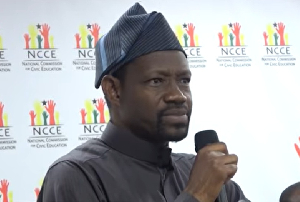
Chairman of Parliament’s Constitutional and Legal Affairs Committee, Shaibu Mahama, has made a strong statement on the poor attitude of the current adult generation; cautioning the youth to learn from its mistakes while demanding accountability from governments.
According to him, Ghana’s major challenge is not a lack of laws but the failure to develop a strong sense of civic responsibility, ethical conduct and patriotism among citizens.
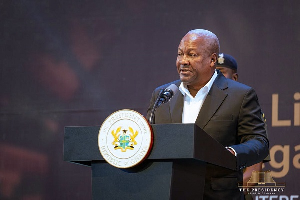
Speaking at a media engagement on August 27, 2026, Mahama said Ghana had enough laws to address many of the challenges confronting the country.
“Indeed, over the weekend, as Chairman of the Constitutional and Legal Affairs Committee, I shepherded virtually every bill that would pass in Parliament. We don't lack the laws in this country,” he said.
He said what Ghana needed was a change in attitude, particularly among citizens and public officials.
“What we lack is the basic ethical and moral consciousness as a Ghanaian,” he said.
Mahama also called for stronger civic education from the grassroots, warning that Ghana’s current generation risked leaving behind a negative legacy if it failed to change its attitude.
“Our generation is a waste. And let's all admit it, that when we leave behind this attitude we have and not teach the kids how they come out and not emulate what we have, then 70 years next year will be a wasteful independence,” he said.
He said institutions responsible for civic education must be adequately resourced to help instil responsible citizenship in children.
“This is the time to resource the very institutions,” he said.
Mahama further urged Ghanaians, particularly the youth, to hold governments accountable irrespective of which political party is in power.
“And so as we move on, we will continue to hold governments accountable. It doesn't matter whether we're in power or not. What is important is the good of this country,” he said.
He explained that while Parliament could approve funds for government programmes, the actual release of those funds remained a separate challenge.
“On our part as Parliament, we will do our very best to approve what has been given. However, approval is different from releases,” he said.
He therefore called for collective efforts to promote civic responsibility and ensure that the values of responsible citizenship are taught from an early age.
“So let's all join hands. Let's push the agenda. Let's make civic responsibility. Drive down from the primary level,” he added.
Mahama also criticised the perception that public officials must use their positions to enrich themselves or provide material benefits to their communities. He said public office should be viewed as an opportunity to serve rather than a means of accumulating wealth.
“You can imagine serving as a minister. You get out, and they're insulting your community. Oh, he didn't even do anything. He hasn't built a house. He hasn't done ABCD,” he said.
“That is the psyche of the community,” he added.
He stressed that such attitudes must change if Ghana is to raise a generation of responsible leaders.
“No, occupying public service is to render service to the public and not to enrich yourself and your family,” he said.
Mahama said civic education should therefore be strengthened at all levels, particularly through clubs and programmes in basic, secondary and tertiary institutions.
“Civic education is extremely important, and it permeates all levels of society. But starting from the grassroots, the clubs at the primary, secondary, and tertiary levels are critical,” he said.
NA/VPO
General News of Saturday, 29 August 2026
Source: www.ghanaweb.com
'Change your attitude!' - Shaibu Mahama to public officials and citizens


Entertainment