The Bank of Ghana (BoG) is using Artificial Intelligence and machine-learning tools to improve inflation forecasting, analyse economic data and strengthen financial supervision.
First Deputy Governor Dr Zakari Mumuni said the technology forms part of the central bank’s broader effort to use advanced modelling and big data to support monetary policy decisions.
Speaking at the 4th Annual Statistics and Data Science Conference in Tamale, Dr Mumuni said AI-assisted models had improved the Bank’s ability to forecast inflation, including before official figures are released.
“We also employ machine-learning models to complement standard econometric models in forecasting GDP and performing text-mining analytics,” he said.
He said the use of more granular data was also helping financial supervisors identify potential risks earlier, replacing the previous reliance on static monthly spreadsheets and manual reconciliation.
Bawumia explains thinking behind Gold-for-Oil, Gold-for-Reserves programmes
“Where supervisors previously relied heavily on static monthly spreadsheets requiring manual reconciliation, increasingly granular data can be validated as it arrives, allowing risks to be identified earlier,” he said.
Dr Mumuni explained that the Bank combines these technologies with conventional econometric methods and its Quarterly Projection Model to assess emerging trends, risks and possible policy outcomes.
“Through econometric techniques and our Quarterly Projection Model within a Forecast and Policy Analysis System, we identify emerging trends, assess risks and consider the likely outcomes of different policy choices,” he said.
He stressed, however, that technology would remain a tool to support rather than replace human decision-making.
“Technology can strengthen our intelligence, but it does not remove the need for human judgment,” he said.
Dr Mumuni recalled the Governor’s directive at his swearing-in in February 2025 for the Bank to adopt a more proactive approach to inflation management through advanced data analytics and AI.
He said the bigger challenge for policymakers was now making useful decisions from the large volumes of information available.
“The greatest challenge facing policymakers today is no longer a shortage of data, but rather turning an abundance of data into timely, reliable and actionable intelligence,” he said.
He added that the Bank continued to collect information directly from businesses and communities, including through market price monitoring and business and consumer confidence surveys.
“Long before a survey appears in a published report, our Research Department staff are in markets across the country—including here in Tamale—tracking prices and conducting business and consumer confidence surveys,” he said.
Dr Mumuni also cautioned against allowing new technologies to undermine established statistical standards.
“New data should complement—not replace—properly weighted and nationally representative measures,” he said.
He urged researchers and policymakers to work more closely, saying both sides needed to understand the questions and challenges involved in economic policymaking.
Business News of Friday, 28 August 2026
Source: classfmonline.com
BoG is using AI to sharpen inflation forecasts, detect risks earlier - Dr Mumuni
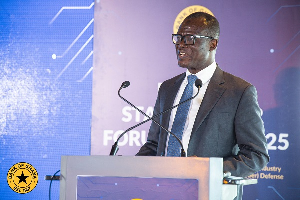 Dr Zakari Mumuni is the First Deputy Governor of Bank of Ghana



Entertainment