The Herald has obtained the names of Members of Parliament (MPS) who served on Parliament’s Select Committee on Mines and Energy when the controversial emergency power agreement between the Government of Ghana and Turkish energy company AKSA Enerji Üretim AŞ was considered and approved in 2015.
The disclosure comes amid renewed scrutiny of the transaction following the conviction in the United States of former Tema Oil Refinery (TOR) Managing Director Asante Kwaku Berko over his role in a bribery scheme involving more than US$1 million allegedly paid to Ghanaian officials.
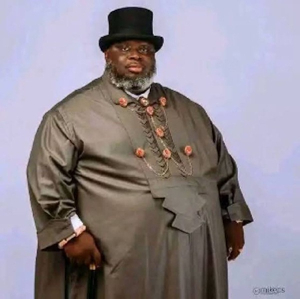
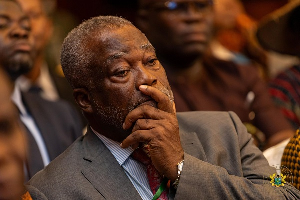
According to information available to The Herald, the parliamentary committee was led by then Madina MP Alhaji Amadu Bukari Sorogho as chairman, with Adam Mutawakilu as vice-chairman and former Adansi Asokwa MP Kwabena Tahir Hammond as the New Patriotic Party’s (NPP) ranking member.
The committee’s membership included the late Mahama Toure Naser; Gershon KB Gbediaeme; Salifu Ameen; Kwadwo Emmanuel Agyekum; Michael Coffie Boampong; Cletus Apul Avoka; Mohammed-Mubarak Muntaka; Mathias Kwame Ntow; Edward M. Ennin; Dr Arthur Stephen Nana Ato; Isaac Kwame Asiamah; William Owuraku Aidoo; Ussif Mustapha; Benjamin Kofi Ayeh; and Joseph Cudjoe.
The administrative staff listed alongside the committee were Peace Fiawoyife, Clerk to the Committee; Benjamin Tachie Antiedu, Assistant Clerk; and Cephas Egbefome, Research Officer.
The Herald understands that a technical inspection trip to Turkey was organised during the consideration of the AKSA project, with Alhaji Sorogho and Hammond among those who travelled to inspect equipment intended for the emergency power plant in Ghana to address the power crisis nicknamed “Dumsor”.
The information available to this paper is that the trip was planned and arranged through the then ministry of power, headed by Dr Kwabena Donkor. The minister, who was also the MP for Pru East at the time, was part of the trip with Sorogho and Hammond.
Other MPs, The Herald learnt, did not embark on the trip, but most of them were said to have collected part of the money. Members of the parliamentary staff were also not included in the trip, and it’s unclear whether they received any of the cash.
A member of the committee’s leadership was said to have been in charge of the cash received from the project’s promoters.
He allegedly kept the money from the other members or substantially reduced their shares without informing them. This often resulted in confusion at committee meetings, with some members reportedly storming his office to demand their share.
One particular MP, from the Ashanti Region, who refused to be short-changed, was repeatedly drawn into near-fistfights with members of the committee’s leadership, particularly the one who hoarded the money.
Dr Donkor’s name has subsequently been linked in public discussion to the US bribery case, although he has categorically denied any involvement, saying he neither knew of nor received any money connected to the alleged scheme.
According to evidence presented during Berko’s US trial, US$46,000 was allegedly paid to members of Ghana’s Parliament who ratified the AKSA agreement, while other officials were allegedly paid smaller sums, including US$5,000.
The US prosecution did not publicly name every alleged recipient.
Alhaji Amadu Bukari Sorogho has denied receiving any bribe from Berko.
The former chairman of the Mines and Energy Committee is reported to have told Accra-based Radio Gold that he never received a bribe from the former TOR boss.
Taste FM in Koforidua has also quoted Mr Sorogho as saying the committee did not rush consideration of the AKSA agreement and that its report was duly presented to Parliament’s plenary for approval.
He has further denied ever meeting or receiving money from Berko, who was convicted by a federal jury in Brooklyn, New York, on August 6, 2026.
The renewed controversy has also placed the spotlight on Mr Hammond, who has publicly concentrated on defending Dr Donkor against allegations linking the former power minister to the bribery scandal.
On August 10, 2026, Hammond, now head of Cavendish Chambers, issued a statement on behalf of Dr Donkor, denying any knowledge of the alleged bribery scheme.
The statement said Dr Donkor was the relevant minister at the time and acknowledged that the Ministry of Power negotiated with AKSA for electricity generation during Ghana’s power crisis.
It also confirmed that a technical team drawn from stakeholders in Ghana’s power sector travelled to Istanbul to inspect equipment intended for Ghana’s power supply. Dr Donkor, however, maintained that he had never met Berko and had never discussed or authorised any personal benefit in connection with the transaction.
He also denied receiving any money or personal benefit from Berko or anyone else, while asserting that anyone who might have demanded money in his name would have been acting for their own benefit.
Hammond, through Cavendish Chambers, warned that any publication deemed to impugn Dr Donkor’s reputation and integrity would result in legal proceedings. The statement, however, has raised questions about Mr Hammond’s own role in the transaction.
At the time, he was the NPP ranking member of the Mines and Energy Committee, which was directly involved in Parliament’s consideration of the emergency power agreement.
The Herald’s information that Mr Hammond travelled to Turkey as part of the inspection delegation, if confirmed, makes his account of the trip and the parliamentary process particularly relevant.
Questions also remain about the full composition of the technical delegation and the circumstances surrounding the alleged payments to Ghanaian officials.
The controversy follows the August 6 conviction of Berko, a dual Ghanaian-American citizen and former TOR managing director.
A US federal jury in Brooklyn found him guilty of conspiring to pay and paying more than US$1 million in bribes to multiple Ghanaian officials between 2014 and 2015.
The payments were linked to the development and financing of a power plant in Ghana involving the Government of Ghana, AKSA and Goldman Sachs, where Berko had previously worked in the investment banking division.
He is scheduled to be sentenced on November 10, 2026, and faces a maximum sentence of 30 years in prison.
US prosecutors told the court that Berko and alleged co-conspirators used the phrase “holy rain” as a coded reference to bribe payments.
They also alleged that shell companies, sham invoices, nominee account holders and cash withdrawals were used to conceal and launder the money, with payments channelled through US and foreign bank accounts.
Goldman Sachs eventually withdrew from the transaction after corruption concerns emerged and reported the matter to investigators.
The Herald has also obtained excerpts from a June 2015 memorandum submitted to Parliament by Dr Donkor, then Minister for Power, seeking parliamentary approval for the AKSA emergency power agreement.
The memorandum, dated June 15, 2015, concerned an agreement between the Government of Ghana, through the Ministry of Power, and AKSA for the provision, on a fast-track basis, of up to 370 megawatts (MW) of installed generation capacity.
The agreement was negotiated against the backdrop of Ghana’s severe power crisis, popularly known as “Dumsor”.
Dr Donkor told Parliament that implementing the agreement would increase generation capacity and help address the impact of the energy crisis on the economy, particularly the industrial sector.
The memorandum said the agreement had been reviewed by officials from the Ministry of Power, the Ministry of Justice and Attorney-General’s Department, the Volta River Authority (VRA) and the Electricity Company of Ghana (ECG).
The Public Utilities Regulatory Commission (PURC) had also been consulted, while discussions were ongoing with the Ministry of Finance over the financial terms.
Technical teams from VRA, Ghana Grid Company (GRIDCo), and AKSA had, according to the memorandum, agreed on the technical design and were ready to implement the project.
The documents further show that the project had received executive approval before it was presented to Parliament for ratification.
A June 2, 2015 letter from then-Secretary to the Cabinet Roger K. Angsomwine informed Dr Donkor that President John Mahama had granted executive approval for the agreement and directed the minister to take the necessary steps to implement it.
The memorandum subsequently asked Parliament to approve the agreement, citing the economic consequences of ongoing load shedding.
The AKSA controversy has intensified calls for a broader investigation into the transaction and Ghana’s safeguards against corruption in public contracting.
Manhyia South MP Nana Agyei Baffour Awuah has argued that an inquiry should go beyond establishing the facts and lead to accountability where wrongdoing is established.
He said the allegations raised fundamental questions about how public contracts were approved, monitored, and protected from corruption.
Baffour Awuah argued that repeated allegations involving Ghanaian public contracts and foreign corruption cases exposed weaknesses in the country’s mechanisms for preventing and prosecuting corruption.
He therefore backed the NPP’s calls for an inquiry into the AKSA transaction, saying the investigation should establish whether public officials influenced decisions relating to the agreement and whether established laws and procedures were breached.
He further called for criminal prosecutions where investigations establish evidence of wrongdoing and urged the Government to introduce institutional reforms to close loopholes that could facilitate corruption in public contracting.
For the MP, the ultimate test of any AKSA inquiry should be whether it produces accountability and reforms capable of preventing similar controversies in the future.
The AKSA project, initially conceived as a 370 MW emergency power arrangement during Ghana’s power crisis, has since expanded considerably to 1,500 MW.
The renewed scrutiny following Berko’s conviction is therefore likely to focus not only on the alleged payments but also on the parliamentary process, the officials involved in negotiating and approving the agreement, the Turkey inspection trip, and the identities of those allegedly targeted or paid.
For now, Dr Donkor and Sorogho have denied any involvement in the alleged bribery, while questions remain about the roles of other officials and members of the parliamentary committee who participated in the process.