Governor of the Bank of Ghana (BoG), Dr Johnson Pandit Asiama, has called on banks to deepen support for small and medium-sized enterprises (SMEs), particularly those operating within agricultural value chains, as improving macroeconomic conditions create opportunities to accelerate private sector growth.
Speaking at the Post-Monetary Policy Committee (MPC) engagement with heads of banks in Accra, the Governor said the economy continues to demonstrate resilience despite rising geopolitical tensions and uncertainties in the global environment.
According to him, Ghana’s economy recorded real GDP growth of 6.4 percent in the first quarter of 2026, up from 6.2 percent in the corresponding period of 2025, driven mainly by the services and industrial sectors.
He added that the Bank’s Composite Index of Economic Activity also points to sustained momentum in economic activity, while confidence surveys indicate positive consumer and business sentiment.
Inflation has also continued to ease significantly. Headline inflation declined to 4.6 percent in July 2026 from 5.3 percent in June, remaining below the lower bound of the Bank’s medium-term target band of 8±2 percent.
Against this backdrop, the MPC unanimously maintained the Monetary Policy Rate at 14 percent, with Dr. Asiama noting that the current policy stance remains appropriate while policymakers assess emerging global risks.
Wave of mergers expected as BoG examines community banks transition plans
The Governor highlighted a sharp improvement in private sector lending, indicating that easing financial conditions are beginning to translate into stronger credit flows.
Private sector credit growth reached 41.2 percent in June 2026, compared with 8.6 percent a year earlier, while real private sector credit expanded by 34.1 percent.
Despite the rebound, he observed that many SMEs continue to face difficulties accessing finance because banks perceive them as high-risk borrowers.
“As banks, you are not merely financial intermediaries; you are important business partners in the growth and transformation of the economy,” Dr Asiama told industry leaders.
He encouraged banks to develop innovative credit products that reflect the seasonal nature of agricultural production and align repayment schedules with borrowers’ cash-flow patterns.
The Governor expressed satisfaction with the improving health of the banking industry, citing stronger balance sheets, enhanced solvency and better asset quality.
Total banking sector assets grew by 30.7 percent in June 2026, supported mainly by deposit growth and higher shareholders’ funds.
The Capital Adequacy Ratio rose to 20.4 percent from 10.6 percent a year earlier, while the Non-Performing Loan (NPL) ratio declined to 16.1 percent from 23.1 percent over the same period.
“These developments reflect the collective efforts undertaken by the institutions represented here today,” he said.
Dr Asiama noted that Ghana’s external sector continues to provide a strong buffer for the economy.
The country’s trade surplus increased to US$8.8 billion during the first half of 2026, compared to US$5.8 billion in the same period last year, supported by strong gold and cocoa export earnings.
The current account surplus also widened to US$5.1 billion from US$4.1 billion. Gross International Reserves stood at US$12.9 billion at the end of June 2026, equivalent to five months of import cover.
He added that the cedi has remained relatively stable amid the strengthening external position.
The Governor also used the occasion to draw attention to several regulatory and supervisory issues facing the banking sector.
He expressed concern over increasing incidents of dud cheques and non-compliance, urging banks to make appropriate use of approved overdraft facilities and strengthen customer education to reduce repeat offences.
Dr Asiama further disclosed that the central bank has intensified its crackdown on unlicensed digital lending operators, including the weekly publication of entities offering digital credit services without regulatory approval.
Banks were advised to conduct enhanced due diligence and verify the licensing status of Digital Credit Service Providers before entering into partnerships.
The Governor revealed that a recent BoG survey found that most banks currently lack dedicated investment products tailored to the Ghanaian diaspora market.
As a result, a significant share of remittance inflows continues to pass through basic transfer channels rather than being channelled into structured savings and investment products.
He urged banks to broaden their offerings by developing diaspora-focused investment products, mobile money solutions and digital remittance platforms.
According to him, the move could deepen financial intermediation, mobilise more diaspora funds for productive investment and support economic development.
“The current economic environment presents us with a significant opportunity, but also a responsibility,” Dr Asiama said, stressing that banks have a critical role to play in converting macroeconomic gains into tangible benefits for businesses, households and the wider economy.
The Bank of Ghana, he added, remains committed to providing a sound regulatory environment and working closely with industry stakeholders to strengthen the banking sector and support sustainable economic growth.
Business News of Thursday, 13 August 2026
Source: businesspostonline.com
BoG Governor urges banks to expand SME lending
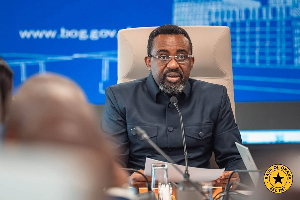 BoG Governor, Dr Johnson Pandit Asiama