A coalition of Ghanaian business leaders operating abroad, led by Michael Asare and Mohammed Abdul, has criticised the country’s political leadership, describing them as “weak leaders” and accusing the government of failing to adequately protect the interests of Ghanaian businesses and workers.
Speaking on behalf of the diaspora business community, the leaders expressed concern over what they described as the growing presence of Chinese nationals in key sectors of Ghana’s economy, which they believe is making it increasingly difficult for local entrepreneurs to compete.
According to the group, successive governments have allowed foreign nationals, particularly Chinese investors and traders, to gain significant footholds in areas traditionally dominated by Ghanaian businesses.
“Our leaders have shown extreme weakness,” the group stated in a strongly worded release. “They have handed virtually every opportunity over to Chinese nationals, effectively rendering Ghanaian citizens both at home and in the diaspora powerless in their own land.”
The business leaders cited illegal mining, retail trade, the automotive industry and spare parts businesses as areas of concern. They alleged that Chinese nationals have increasingly become involved in these sectors, particularly in major commercial centres such as Accra and Kumasi.
The group also raised concerns about the government’s proposed measures to restrict the importation of right-hand-drive vehicles and overage vehicles.
They questioned the potential impact of such policies on Ghanaian mechanics and other workers within the automotive sector, arguing that some Chinese businesses import vehicles together with spare parts and employ Chinese nationals to work in their operations.
According to the diaspora leaders, such developments could threaten the livelihoods of Ghanaian mechanics and other workers and contribute to rising unemployment if adequate measures are not put in place to protect local employment.
The coalition further expressed concern about the environmental and economic impact of illegal mining, popularly known as galamsey. They alleged that some Chinese nationals, in collaboration with local actors, have been involved in illegal mining activities that have contributed to the destruction of water bodies, forest reserves and agricultural lands.
“They have taken over our mining industry through illegal galamsey, poisoning our rivers and destroying our ecosystem with impunity,” the leaders lamented.
The diaspora business leaders also criticised labour practices associated with some foreign-owned businesses, alleging that certain companies recruit workers from China for jobs they believe could be performed by qualified Ghanaians.
They argued that such practices could further limit employment opportunities for Ghanaian youth at a time when unemployment remains a major concern.
“Instead of creating jobs for the millions of young, vibrant Ghanaians who are struggling to survive, our leaders are sitting back while foreign nationals take up roles that our own people are more than qualified to do,” the group added.
The concerns raised by the diaspora business community reflect broader debates in Ghana over foreign participation in the economy, enforcement of retail trade regulations, local employment and the regulation of illegal mining.
While successive governments have maintained that foreign investment is important to Ghana’s economic development, critics have called for stronger enforcement of laws governing foreign participation in certain sectors and greater protection for indigenous businesses.
The diaspora leaders are therefore calling for urgent policy reforms, including the enforcement of existing laws governing retail trade, stronger action against illegal mining and measures to protect Ghanaian businesses and workers from unfair competition.
They urged the government to prioritise the economic interests of Ghanaians while ensuring that foreign investment contributes meaningfully to national development.
Business News of Thursday, 13 August 2026
Source: Eric Obeng Boateng, Contributor
Diaspora business leaders criticise Ghanaian authorities over alleged foreign dominance
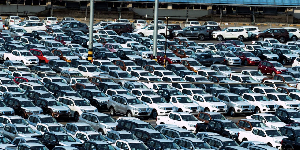 Some used cars that are imported into the country