The Institute for Fiscal Studies (IFS) has raised concerns about Ghana’s 2026 Mid-Year Budget Review, arguing that significant weaknesses in budget execution, revenue projections and fiscal data have undermined the credibility of the government's economic plans.
Speaking at a press conference on August 12, 2026, the Executive Director, Dr Said Boakye, expressed concern over what it described as poor budget execution during the first half of the year.
In an analysis of the review presented to Parliament on July 23, 2026, the institute acknowledged some positive developments, including stable macroeconomic conditions, declining interest rates and efforts by the Ministry of Finance to strengthen expenditure controls through its Commitment Authorization System.
The IFS also welcomed plans to extend the system’s coverage to State-Owned Enterprises (SOEs), noting that persistent financial challenges within SOEs have contributed to Ghana’s debt burden.
According to the analysis, government expenditure fell significantly short of its target, with actual spending amounting to GH¢136.94 billion against a budgeted GH¢172.54 billion.
Capital expenditure and arrears payments recorded some of the largest shortfalls, a development the institute believes could negatively affect economic growth and private sector activity.
Dr Said Boakye argued that the substantial underspending could not be fully explained by revenue shortfalls.
Government denies plans to sell Adamus Resources after mining lease revocation
He noted that domestic financing of the budget fell far below target while resources were simultaneously accumulated in the Sinking Fund. He said this raises questions about government planning and adherence to approved budgetary targets.
He maintained that “the government's target of achieving total revenue and grants equivalent to 16.8 percent of GDP remains difficult to attain, given historical performance and current trends.”
He also argued that economic growth projections should have been revised upward in light of stronger-than-expected GDP growth figures released since the original budget was presented.
Dr Said Boakye further pointed to several inconsistencies in fiscal data contained in the budget review.
According to him, discrepancies between reported revenue targets and the sum of individual revenue components, as well as conflicting figures for tax refunds, create uncertainty about the accuracy of key fiscal indicators.
The IFS also criticised the absence of a clear strategy to mobilize revenue from Ghana’s rapidly expanding small-scale gold mining sector.
He noted that although small-scale mining accounted for a substantial share of the country's gold exports in 2025, government revenue from the sector remains limited.
To address these challenges, the institute recommended improved budget execution, more evidence-based forecasting, the development of a comprehensive revenue strategy for the small-scale mining sector and stronger validation processes to ensure the consistency and reliability of fiscal data.
AM
#TrendingGH: 'Revisit the case' - Netizens react to controversial court ruling
Business News of Wednesday, 12 August 2026
Source: www.ghanaweb.com
IFS raises concerns over credibility of 2026 Mid-Year Budget Review
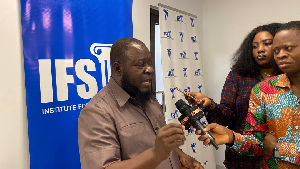 Executive Director for Institute for Fiscal Studies, Dr Said Boakye