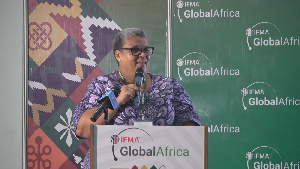
The Deputy Minister for Works, Housing and Water Resources, Gizella Tetteh-Agbotui, has cautioned against treating facility management as an afterthought in Ghana’s infrastructure development.
She said facility managers must be involved from the outset of major projects to help improve efficiency, reduce maintenance costs and ensure that public assets deliver value throughout their life cycle.
Speaking at the International Facility Management Association (IFMA) Global Conference in Ghana on Wednesday, August 12, 2026, Tetteh-Agbotui said involving facility managers only after construction was completed could result in missed opportunities to address operational and maintenance challenges.
Gold leads Ghana's exports, earns more than cocoa and oil combined
She said Ghana’s growing investment in housing, water and other critical infrastructure made professional facility management more important than ever.
According to her, the country must focus not only on constructing infrastructure but also on ensuring that such assets are properly operated, maintained and managed throughout their lifespan.
She noted that facility managers possess practical knowledge and operational data that could significantly influence project design and help prevent costly problems after completion.
Their early involvement, she said, would ensure that buildings were designed with long-term functionality, maintainability, sustainability and value for money in mind.
“When facility managers participate from the onset, they help ensure that building designs are designed with long-term functionality, maintenance and value for money in mind,” she said.
Tetteh-Agbotui called for stronger collaboration among facility managers, architects, engineers, contractors, project managers and other built-environment professionals, stressing that no single profession could deliver efficient infrastructure in isolation.
She explained that while an architect might identify an office location as a high-traffic area, facility management data could reveal that as many as 3,000 people use the space daily.
Such information, she said, could influence decisions on space allocation, circulation, access, utilities and maintenance.
The Deputy Minister also urged government, industry and training institutions to invest more in education, professional certification and continuous professional development to build a highly skilled facility management workforce capable of managing Ghana’s expanding infrastructure base.
She commended the IFMA Ghana Chapter for creating a platform that brings policymakers, academics and practitioners together to advance the profession.
Tetteh-Agbotui challenged stakeholders to move beyond simply constructing infrastructure and focus on ensuring that every asset was properly managed, maintained and optimised from the design stage through to the end of its life cycle.
The IFMA Global Conference brings together facility management professionals, real estate executives, property developers, built-environment experts, policymakers, investors and business leaders from Ghana and across the world.
This year’s conference focuses on innovation, sustainability, smart buildings, workplace transformation and the future of the built environment.
DR/MA
Business News of Wednesday, 12 August 2026
Source: www.ghanaweb.com
IFMA Conference: Early facility management key to protecting infrastructure - Tetteh-Agbotui



Entertainment

Van Vicker 'slaps' LilWin with GH¢10m defamation suit


Opinions