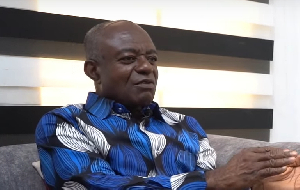
Private legal practitioner, Amanda Akuokor Clinton, has called on the Judiciary to explain what she describes as an apparent “selective urgency” in the decision to proceed with some high-profile criminal trials during the legal vacation.
She said while courts have the legal authority to sit during the vacation, the continued hearing of politically sensitive criminal cases in the absence of some lawyers and accused persons could raise concerns about the right to a fair trial.
Legal Vacations and Trials: Why the GBA President is in error
Speaking in an interview on JoyNews on Wednesday, August 12, 2026, Clinton said the issue had moved beyond an administrative decision about the legal vacation and had become a constitutional matter.
“We're talking about a substantive criminal trial or trials, selective high-profile cases, absent counsel and accused persons being threatened with personal cross-examination. It moves the conversation from administrative to fair trial,” she said.
She noted that the circumstances could potentially give the accused persons grounds to challenge the proceedings under Article 19 of the 1992 Constitution, which guarantees the right to a fair trial.
Clinton, however, acknowledged the authority of the Judiciary to determine which cases should proceed during the legal vacation.
“But ultimately, I think the Judiciary, although the Judiciary has full rights on this, they must avoid creating the appearance of selective urgency,” she stated.
According to her, there would be little concern if the courts were sitting during the vacation to ensure general continuity of judicial work.
“If vacation courts are for general continuity, that's fine; it's understood. But if only politically sensitive criminal trials are moving at full speed, whilst we can say a lot of other cases are sleeping, the Judiciary must explain the objective criteria,” she argued.
Her comments come amid controversy over the decision to continue with some high-profile criminal cases during the legal vacation, with lawyers for some accused persons raising concerns over their availability and other commitments.
Clinton said the trial judge ultimately had the responsibility to determine whether proceedings should continue after considering objections from counsel.
She also urged the court to take the constitutional right to a fair trial into account before making decisions that could later become the subject of further legal challenges.
“The trial judge [has] to decide whether they're going to listen to counsel's written objection that they're not available, and for the court to also consider perhaps Article 19 in advance of them perhaps just linking this to the Supreme Court later,” she said.
In her estimation, the practical consequences of rushing complex criminal trials during the vacation should also be considered.
“Practically speaking, what would a few months cost when it's a complex criminal case?” she asked.
She argued that postponing such cases for a few months would not necessarily cause significant prejudice, particularly when the liberty and finances of accused persons are at stake.
“People's lives are at stake, a lot of money is on the table, jail time is on the table. This could wait a few months, and the lawyer handling the case sort of has deeper knowledge and deep exposure to the case,” she said.
Clinton maintained that although vacation courts may legally continue sitting, the Judiciary must balance that authority with the need to protect the integrity and fairness of criminal proceedings.
“The end result will come in any case. I mean, that's just my view on this,” she added.
NA/VPO
General News of Wednesday, 12 August 2026
Source: www.ghanaweb.com
Judiciary must explain ‘selective urgency’ in legal vacation trials - Amanda Clinton
 Amanda Akuokor Clinton is a private legal practitioner in Ghana