The Minister of Youth Development and Empowerment, George Opare-Addo, has disclosed that government will redirect a significant majority of national service personnel into the private sector under a new retention agreement designed to bridge the gap between education and employment.
Under the upcoming Graduates in Corporate Support (GRICS) programme, private sector organisations partnering with the state will be required to sign Memorandums of Understanding (MoUs) guaranteeing the permanent employment or retention of at least 60% of service personnel deployed to them.
Speaking at the National Youth Conference organised by the National Youth Authority (NYA) at KNUST’s Great Hall on Sunday, August 9, 2026, Opare-Addo explained that public sector agencies are heavily congested, with data showing graduates posted to government institutions spend between four and ten years searching for permanent jobs post‑service, compared to one to three years in the private sector.
“In the coming days, a lot of our service personnel will not be posted to the government sector anymore. We intend to push many more into the private sector where the real jobs exist,” he said.
He emphasised that the MoUs guarantee organisations will employ or retain a minimum of 60% of personnel assigned to them. The policy shift forms part of a broader structural overhaul by the ministry and its sub‑agencies — including the NYA, Youth Employment Agency (YEA), and National Entrepreneurship and Innovation Programme (NEIP) — to align skill acquisition with market demand.
Alongside GRICS, government is expanding the National Apprenticeship Programme to support Senior High School (SHS) graduates who do not transition to tertiary education, a group accounting for roughly six to seven out of every ten Free SHS graduates.
The initiative will use a community‑based master‑apprentice model tailored to regional economies, ensuring participants secure livelihoods locally without migrating to Accra or Kumasi.
At the international level, Opare-Addo said the YEA is managing a new Global Labour Exchange Programme to facilitate the structured export of skilled Ghanaian youth to foreign markets in Europe, Asia, and the Americas facing labour shortages.
He also announced plans for a Domestic Care Economy initiative next year to replace temporary community protection roles with a standardised, sustainable workforce.
The minister stressed that state action alone cannot resolve youth unemployment, calling for active support from financial institutions, universities, and private employers.
For his part, Osman Abdulai Ayariga, CEO of the National Youth Authority, also advised the youth at the conference, urging them to embrace opportunities under the new programmes.
Business News of Wednesday, 12 August 2026
Source: classfmonline.com
Government eyes private sector jobs for NSS personnel
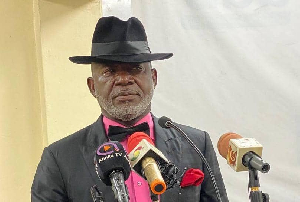
 George Opare-Addo is the Minister of Youth Development and Empowerment