Legal practitioner and journalist, Samson Lardi Ayenini, has weighed into the debate over the observance of legal vacation in Ghana’s superior courts, backing the Ghana Bar Association’s (GBA) call for the established break for lawyers to be respected.
His comments follow an open letter by the GBA to the Chief Justice, Paul Baffoe-Bonnie, in which the association raised concerns over the observance of legal vacation.
In a piece published on myjoyonline.com on August 11, 2026, Ayenini argued that the GBA’s position goes beyond a mere preference, describing it as grounded in existing law, established judicial convention and long-standing practice.
He said that even when specific cases, including matters associated with the Office of the Special Prosecutor’s Operation Recover All Loot (ORAL), are removed from the discussion, the fundamental principles governing court proceedings during legal recess remain clear.
NPP demands withdrawal of warrants for vacation court trials
According to him, three key principles should guide the debate.
Legal vacation is provided for by law
Ayenini cited Order 79 Rule 4 of the High Court (Civil Procedure) Rules, 2004 (CI 47), arguing that the two-month legal vacation is not simply an administrative arrangement.
He said the rules recognise the need for judges and lawyers to have a mandatory period of rest following an intensive 10-month legal term.
“Under Order 79 Rule 4 of the High Court (Civil Procedure) Rules, 2004 (C.I. 47), the two-month-long vacation is not an administrative courtesy,” he stated.
He maintained that the legal vacation therefore forms part of the established framework governing the administration of justice.
Vacation courts are for urgent matters
Ayenini further argued that vacation courts have traditionally been established to deal with emergencies and urgent applications rather than conduct full substantive trials.
He cited matters such as bail applications, injunctions and applications involving the enforcement of fundamental human rights as examples of cases ordinarily handled during the recess.
He noted that vacation courts may sit physically or virtually, but their primary purpose has traditionally been to address urgent interlocutory matters.
Counsel’s availability
A central part of Ayenini’s argument is that lawyers have traditionally appeared before vacation courts voluntarily rather than being compelled to participate in proceedings.
He said once counsel informs the court of their unavailability because of previously scheduled professional engagements, international commitments or necessary leave, the matter should not ordinarily be forced ahead.
According to him, the absence of counsel during the recess has not traditionally been treated as wilful default, nor have litigants been compelled to represent themselves because their lawyers are unavailable.
He argued that compelling lawyers to participate in substantive trials during the statutory vacation could undermine procedural fairness and place undue pressure on legal practitioners.
“Lawyers are personally responsible for their professional well-being and maintaining a sustainable work-life balance,” he said.
He added that respecting the legal vacation should not be viewed as an obstacle to justice but as part of the safeguards that support an effective justice system.
Lower courts provide possible model
Ayenini also pointed to the existing arrangement in Ghana’s lower courts, where cases continue during the legal vacation under an established leave-roster system.
He suggested that the system could provide a possible model for future administrative reforms involving the superior courts.
However, he stressed that such reforms would first have to be formally considered and adopted by the Judicial Service.
Until then, he said, the existing legal framework and established practice should remain the standard.
Call for respect for status quo
Ayenini emphasized that the law, judicial convention and settled practice of the Bar provide a clear basis for observing legal vacation in the superior courts.
He maintained that vacation courts should ordinarily focus on urgent interlocutory matters and that the participation of counsel during the recess has traditionally been consensual.
While acknowledging that discussions on possible reforms are welcome, he urged both the Bench and the Bar to respect the existing framework until any changes are formally introduced.
“The integrity of our legal system depends on predictable rules, uniformly applied,” he argued, adding that until the relevant frameworks are formally reformed, the existing status quo should be respected by both the Bench and the Bar.
'Legal vacation doesn't mean judges cannot sit' – CJ Baffoe-Bonnie explains
General News of Wednesday, 12 August 2026
Source: www.ghanaweb.com
Ayenini backs GBA's position on legal vacation, cites key principles
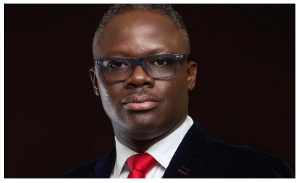 Samson Lardy Anyenini is a broadcaster and private legal practitioner