Government turns to agriculture, manufacturing and agro-processing to reduce gold dependence
Ghana is intensifying efforts to expand its non-traditional export sector as part of a broader strategy to reduce the economy’s heavy dependence on gold and build multiple sources of foreign-exchange earnings.
The government has set an ambitious target of increasing annual non-traditional export earnings from approximately US$3.5 billion to at least US$10 billion by 2030.
The target forms part of efforts to transform Ghana from an economy heavily reliant on the export of raw commodities into a production and export-oriented economy driven by agriculture, manufacturing, agro-processing and services.
The push has gained urgency following the sharp increase in gold’s contribution to Ghana’s export earnings.
Gold accounted for about 68.3 percent of total export earnings by July 2026, while cocoa contributed 12.5 percent, crude oil 9.4 percent and non-traditional exports 9.8 percent.
Although gold has helped strengthen Ghana’s trade balance and external reserves, the International Monetary Fund (IMF) has warned that excessive concentration in the commodity exposes the economy to external shocks.
The Fund said a significant decline in gold prices could quickly reduce export receipts, foreign-exchange inflows and fiscal resources.
The government’s response is therefore centred on using the current period of strong commodity earnings to support investment in sectors capable of generating sustainable export revenues.
One of the main vehicles is the 24-Hour Economy and Accelerated Export Development Programme, backed by the 24-Hour Economy Authority Act, 2026.
The programme seeks to promote domestic production, expand industrial capacity and create opportunities for businesses to participate in export-oriented value chains.
An Accelerated Export Development Advisory Committee has also been established to coordinate efforts involving government, the private sector and development partners around investment, market access and barriers to exports.
Agriculture is another major component of the diversification strategy.
Through the Feed Ghana Programme and the broader Agriculture for Economic Transformation Agenda, the government is seeking to expand production of commercial crops and strengthen agricultural value chains involving commodities such as coconut and cashew.
The emphasis is increasingly shifting from simply exporting raw agricultural products to processing them domestically before they reach international markets.
Government-supported agro-processing initiatives covering products such as yam, poultry, fish, cashew, rice, shea butter and palm-kernel oil are expected to contribute to this objective.
New and expanded processing facilities could allow Ghanaian businesses to retain a greater share of the value generated from agricultural exports while creating jobs and strengthening domestic manufacturing.
However, achieving the US$10 billion export target will require substantial investment and improvements in the business environment.
Export-oriented agriculture and manufacturing require long-term financing, reliable electricity, efficient transport systems, modern logistics and access to international markets.
Ghanaian businesses also face challenges related to production costs, infrastructure constraints, limited processing capacity and international quality standards.
Financing could prove particularly challenging as the country continues to pursue fiscal consolidation following its recent debt crisis.
The government will therefore need to strike a balance between supporting productive investment and maintaining fiscal discipline.
Policy consistency will also be critical. Investors in agriculture, manufacturing and export infrastructure typically require several years to recover their investments. Frequent changes in taxes, regulations, incentives or trade policies could undermine investor confidence.
There are, however, signs that the broader economic recovery is beginning to support domestic production.
Bank of Ghana Governor Dr Johnson Pandit Asiama has said Ghana’s economy expanded by 6.4 percent in the first quarter of 2026, with services and industry among the key drivers.
Private-sector credit growth also exceeded 41 percent in June, indicating a significant improvement in financial intermediation and access to credit for businesses and households.
These developments could provide a stronger foundation for investment in export-oriented enterprises.
Nevertheless, the US$10 billion target will not immediately displace gold as Ghana’s dominant source of export earnings. At US$10 billion, non-traditional exports would still be smaller than the approximately US$12.5 billion generated by gold during the first half of 2026 alone.
The objective, therefore, is not to reduce Ghana’s gold production or earnings but to ensure that gold is complemented by a broader range of competitive export sectors.
If successfully implemented, the diversification strategy could make Ghana’s external position more resilient, create employment and increase the domestic value retained from exports.
The IMF’s warning consequently provides an important policy signal: Ghana’s current gold-led export strength should be used as a platform for building a more diversified economy before the next commodity-price downturn exposes the risks of excessive concentration.
Business News of Wednesday, 12 August 2026
Source: businesspostonline.com
Ghana steps up push to build US$10 billion non-traditional export sector
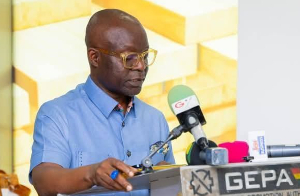 Francis Kojo Kwarteng Arthur is the CEO of GEPA