The Executive Secretary of the Inter-Ministerial Coordinating Committee on Decentralisation (IMCCoD) Dr Gameli Kewuribe Hoedoafia, has called for a renewed national commitment to strengthening Ghana's decentralisation system, emphasising the need for local governance structures that are democratic, accountable, adequately resourced, responsive to citizens' needs and transformative in driving local development.
Delivering the welcome address at the Second National Dialogue on Decentralisation and Responsive Governance on August 10, 2026, held under the theme, “Re-Setting Democratic Decentralisation for Accountable Public Service Delivery and Accelerated Local Development,” the Executive Secretary stressed that Ghana's decentralisation agenda has reached a critical stage that requires renewed focus on implementation and results.
Addressing participants, including the Vice President of the Republic, ministers of state, members of Parliament, traditional and religious leaders, development partners, civil society organisations, academia and local government practitioners, the Executive Secretary described the Vice President's presence as a strong demonstration of government's commitment to democratic decentralisation and responsive governance.
According to the Executive Secretary, Ghana's decentralisation journey, which began in 1988 and was subsequently entrenched in the 1992 Constitution and strengthened through the Local Governance Act, 2016 (Act 936), has contributed significantly to citizen participation, local leadership and community development over the past three decades.
While acknowledging the progress made, the Executive Secretary cautioned against complacency, noting that the longevity of the decentralisation process should inspire greater ambition rather than satisfaction with past achievements.
The address highlighted Cabinet's recent approval of the National Decentralisation Policy and Strategic Framework (NDPS) 2026–2030 as a major milestone in Ghana's governance reforms. However, the Executive Secretary stressed that policy approval alone would not guarantee success.
“The real test now lies in coordination, implementation and delivery,” the Executive Secretary stated, urging stakeholders to ensure that the new policy framework translates into tangible improvements in public service delivery and local development outcomes.
Explaining the significance of the dialogue's theme, the Executive Secretary noted that the phrase “re-setting” was deliberately chosen to reflect the need for a fresh approach to decentralisation.
The focus, he said, should shift from measuring success by the number of institutions established and functions transferred to assessing the quality of services delivered and the impact felt by citizens.
He further underscored three key objectives that should guide the next phase of decentralisation: strengthening democratic participation, ensuring accountable public service delivery and accelerating local development.
Participants were also encouraged to visit an exhibition mounted by the country's 16 Regional Coordinating Councils, showcasing development projects implemented across various districts.
The exhibition featured roads, markets, health facilities, water systems, classrooms and other infrastructure projects aimed at demonstrating the practical outcomes of decentralisation.
The Executive Secretary noted that the dialogue coincided with the commemoration of African Decentralisation and Local Development Day, observed annually on August 10 following its adoption by African Heads of State and Government at the 2014 African Union Summit in Malabo.
He announced plans by the IMCCoD to institutionalise the National Dialogue on Decentralisation and Responsive Governance as an annual platform for reflection, accountability, partnership and action. The initiative, he explained, would provide stakeholders with an opportunity to assess progress, share innovations, address challenges and agree on practical measures to strengthen local governance.
“As we commemorate the African Union's Decentralisation and Local Development Day, let us renew our commitment to a system of local governance that is democratic in practice, accountable in conduct, adequately empowered and resourced, responsive in service delivery and transformative in local development,” the Executive Secretary stated.
AM
#TrendingGH: 'Revisit the case' - Netizens react to controversial court ruling
Business News of Tuesday, 11 August 2026
Source: www.ghanaweb.com
IMCCoD Executive Secretary calls for renewed commitment to democratic local governance
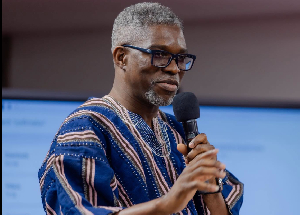 Executive Secretary of the IMCCoD, Dr Gameli Kewuribe Hoedoafia