Ghana’s trade position has undergone a major transformation over the past 20 years, with the country recording a record GH¢148.3 billion trade surplus in 2025, according to the Ghana Statistical Service (GSS).
The development marks a significant reversal from 2004, when imports accounted for 67.9% of Ghana’s total merchandise trade, compared with 32.1% for exports.
By 2025, the situation had changed, with exports accounting for 61.3% of total merchandise trade, while imports accounted for 38.7%.
The GSS, in its Ghana’s Merchandise Trade Statistics: Two Decades in Review, released on August 11, 2026, said total merchandise trade increased from $6.0 billion in 2004 to $52.5 billion in 2025.
MoFA targets GH¢100 million for agricultural education fund by 2028
Ghana recorded trade surpluses in 2011, 2014, 2018, 2019, 2023, 2024 and 2025.
The value of the surplus has also increased significantly in recent years, rising from GH¢5.3 billion in 2023 to GH¢44.7 billion in 2024 before reaching GH¢148.3 billion in 2025.
Gold emerged as the dominant driver of Ghana’s exports, accounting for 63.1% of total exports in 2025, up from 38.5% in 2004.
At the same time, the share of cocoa beans and cocoa products in exports declined from 29.3% in 2004 to 14.0% in 2025.
Mineral fuels and oils accounted for 8.8% of exports in 2025.
The GSS also recorded growth in some non-traditional exports. Cocoa products increased their share from 9.8% in 2004 to 27.0% in 2025, while edible fruits and nuts rose from 6.1% to 12.1%. Plastics accounted for 8.5% of exports in 2025.
Rent Control orders landlords, hostels to issue rent cards
The Service said the changing trade structure highlights the need for Ghana to deepen domestic value addition and increase production.
It recommended greater value addition in gold and cocoa, expansion of non-traditional exports, and support for small and medium-sized enterprises to gain access to international markets.
DR/MA
Business News of Tuesday, 11 August 2026
Source: www.ghanaweb.com
Exports now account for 61.3% of Ghana's trade - GSS
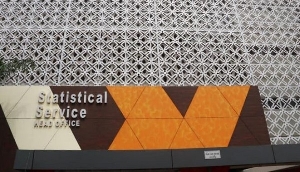 GSS said total merchandise trade increased to $52.5 billion in 2025