The Minister of Food and Agriculture Eric Opoku, has described the Ghana Agricultural Fund for Education and Transformation (GAFET) as a key human capital pillar of the government’s Feed Ghana Programme.
According to the Minister, GAFET is not a separate initiative from the Feed Ghana Programme but is designed to provide the skilled workforce and institutional capacity required to achieve its agricultural transformation goals.
Speaking at the launch of GAFET on August 11, 2026, the Minister said Ghana could not transform its agricultural sector without investing in the people and institutions responsible for driving that transformation.
MoFA targets GH¢100 million for agricultural education fund by 2028
“The Ghana Agricultural Fund for Education and Transformation is therefore not separate from the Feed Ghana Programme. It is an important human capital pillar for delivering its vision,” he said.
The Minister said the Feed Ghana Programme seeks to increase food production, modernise farming, strengthen mechanisation, expand irrigation, promote agro-processing, reduce dependence on food imports, increase exports and create sustainable jobs, particularly for young people and women.
However, he noted that achieving these objectives would require people with the right knowledge, practical skills, creativity and discipline.
“Before we can sustainably feed Ghana, we must equip Ghana. Before we transform our farms, we must strengthen the institutions that prepare the people who transform those farms,” he said.
GAFET is aimed at mobilising sustainable funding to strengthen agricultural education and capacity development in Ghana.
The Fund is expected to support agricultural colleges, universities, technical institutions, research and training centres, as well as other institutions responsible for developing the professionals, technicians, researchers, entrepreneurs and agribusiness leaders needed to drive the agricultural sector.
The Minister said many agricultural institutions currently require renewed investment in laboratories, workshops, demonstration farms, modern machinery, digital learning tools, research, scholarships and industry-responsive curricula.
He said strengthening these institutions would help produce graduates capable of addressing the practical challenges facing Ghana’s agricultural sector.
Rent Control orders landlords, hostels to issue rent cards
The Minister stressed that infrastructure such as roads, irrigation systems and machinery alone would not transform agriculture.
“Behind every road, irrigation system, machine and financing instrument are people who must design, operate, maintain, improve and sustain them,” he said.
He therefore described investment in agricultural human capital as a national priority, saying the quality of Ghana’s agricultural transformation would depend largely on the quality of the people and institutions driving it.
GAFET, he said, would help bridge this gap by bringing together resources to strengthen the institutions that train the workforce needed to make the Feed Ghana Programme successful.
DR/MA
Business News of Tuesday, 11 August 2026
Source: www.ghanaweb.com
GAFET is human capital pillar of Feed Ghana Programme - MoFA
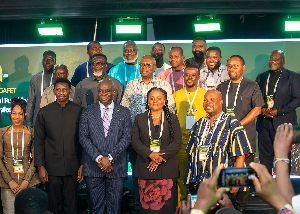 GAFET is aimed at mobilising sustainable funding to strengthen agricultural education