The proposed Ghana COCOBOD Bill, 2026, is set to usher in a new financing model for Ghana’s cocoa sector, with the Ghana Cocoa Board (COCOBOD) preparing to raise about GH¢13 billion from the local market this month to finance cocoa purchases and ease its debt burden.
The move will mark a major shift from the board’s long-standing reliance on syndicated loans.
The Chief Executive Officer of COCOBOD, Dr Randy Abbey, said the board would issue 270-day commercial notes as part of a broader funding strategy under the new legislative framework.
He said the new approach was necessary because of the financial pressures facing the board and the difficulties associated with its traditional financing arrangements.
Proposed Cocoa Bill could restrict farmers and discourage youth - NPP warns
“We need to raise the money this month. We are hopeful that we will be able to raise the money and have an enduring funding policy for cocoa,” Dr Abbey said at a media sensitisation programme on the proposed Ghana COCOBOD Bill, 2026, on August 5, 2026.
The financing plan forms part of broader reforms contained in the proposed COCOBOD Bill, which seeks to provide a new framework for the management and financing of Ghana’s cocoa industry.
Dr Abbey explained that COCOBOD would avoid borrowing the full amount required to purchase the crop at once. Instead, it plans to raise about half of its annual financing requirement and recycle the funds within the 270-day period.
“These 270-day commercial notes will be what we will use, so we are raising the money domestically,” he said.
According to Dr Abbey, local pension funds alone have more than GH¢100 million available to support the domestic financing programme.
The new financing arrangement is also expected to help COCOBOD manage about GH¢26 billion in annual debt obligations arising from deferred cocoa bills for 2026, 2027 and 2028.
Dr Abbey said the board intended to refinance part of the outstanding debt over five years instead of facing the full repayment pressure each year.
“Instead of taking GH¢26 billion and paying interest on GH¢26 billion, we will take, let's say, GH¢13 billion, turn it around twice within those 270 days, and then pay it back. This is how we intend to fund the crop,” he explained.
He said COCOBOD would also issue five-year bonds annually to deal with the outstanding cocoa bills.
“What we believe will be the right thing to do is to refinance these cocoa bills for a longer time, say, five years,” Dr Abbey said.
“That will mean that we will have less pressure. We will not have to find GH¢26 billion every year for the next three years. So, we will then have to pay a smaller amount over five years.”
Dr Abbey said the domestic commercial notes and bonds would form part of the new funding model, while a special purpose vehicle would bring together human resources and technical expertise from different sectors to support cocoa financing and operations.
The reforms also come as Ghana and Côte d’Ivoire seek to strengthen cooperation in the cocoa sector.
Dr Abbey said the two countries had agreed to align their cocoa seasons, with both countries expected to open their seasons in September from this year.
ANAS/MA
Ghana's recovery due to superior economic management - Ato Forson
Business News of Tuesday, 11 August 2026
Source: www.ghanaweb.com
COCOBOD targets GH¢13 billion local funding under new financing model
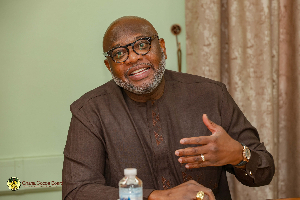 Dr Randy Abbey is the CEO of COCOBOD



Entertainment