Years earlier, the people of Ghana had taken responsibility for shaping the future of their own country. As the first sub-Saharan African nation to gain independence from colonial rule, Ghana had become a symbol of hope and possibility for a continent moving towards self-government.
But independence also brought enormous challenges.
Across the country, people were leaving rural communities and moving to the cities in search of work. Yet employment opportunities remained limited. Many who found jobs were underemployed, while the country struggled to maintain a consistent, long-term development plan.
CUTS questions legality of DVLA licence renewal charges
Political changes and heavy foreign debt made the situation even more difficult. Governments often had to devote scarce resources to debt repayments before they could address broader national development priorities.
Still, Ghana was producing.
Factories were turning out goods for local consumption and export, but industrial growth faced major obstacles. Production costs were high, many raw materials had to be imported, and Ghanaian industries faced strong competition from foreign products.
In the countryside, development was slower. Loans were often directed towards specific projects that did not immediately improve the lives of rural communities. Some ambitious projects also failed to deliver the expected results.
The footage captures some of these challenges: an unfinished or poorly planned building standing empty, a four-lane highway with almost no traffic, and agricultural equipment left abandoned and rusting away.
Yet the story was not entirely one of disappointment.
Some major investments were transforming Ghana. The Volta River Dam had been completed, creating one of the world's largest man-made lakes.
The project provided hydroelectric power, improved water supplies, created transportation opportunities and supported the fishing industry.
The images of Ghana in 1972 therefore tell the story of a nation caught between promise and difficulty.
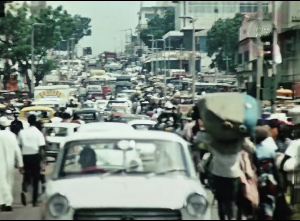
Busy marketplaces, growing industries, rural communities, ambitious construction projects and newly developed infrastructure all reveal a country striving to build its future.
Ghana, 1972 — archival footage capturing everyday life, busy marketplaces and scenes of industry, offering a glimpse into the country’s social and economic life during the early 1970s. pic.twitter.com/vSDoyD5uhM
— GHANA FACTS & HISTORY (@GhanaianMuseum) August 10, 2026
ANAS/MA