Asante Kwaku Berko’s conviction in the United States should compel Ghana to look beyond the individual and examine the business and political ecosystem that has allowed AKSA’s footprint in the country’s power sector to expand despite years of corruption allegations.
The conviction of former Tema Oil Refinery (TOR) Managing Director Asante Kwaku Berko in the United States has reopened a deeply uncomfortable chapter in Ghana’s power sector.
What makes the case particularly troubling is not simply that a former Ghanaian public official has been convicted in connection with a bribery scheme involving a power project in Ghana.
It is that the project at the centre of the US investigation has continued to have a long and expanding commercial life in Ghana, while the Ghanaian authorities have appeared remarkably reluctant to subject the broader transaction and the interests surrounding it to the same level of scrutiny.
The US case concerned the AKSA power project in Ghana. According to US prosecutors, Berko participated in a scheme involving more than US$1 million in payments to Ghanaian officials to secure approvals for the project.
The allegations were not confined to an obscure administrative transaction. The approvals involved senior government officials and institutions whose decisions were necessary to establish the project and secure its contractual arrangements.
The matter was investigated publicly by American authorities for years, and the allegations concerning Ghanaian officials were therefore not unknown to the Ghanaian state.
Yet, while the American authorities pursued the case, the Ghanaian side of the transaction remained largely unexplored in public.
That is the first question Ghana must now confront: why did the conviction of an individual involved in securing the AKSA deal not trigger a comprehensive investigation into the Ghanaian officials, intermediaries and commercial interests involved in the transaction?
More importantly, why did the controversy surrounding the original project not result in a fundamental reassessment of AKSA’s growing relationship with the Ghanaian state?
From An Emergency Power Project To A Strategic Position In Ghana’s Power Sector
AKSA entered Ghana at a time when the country was struggling with a severe electricity supply crisis.
The company’s original project involved bringing power-generation equipment into Ghana, including equipment transferred from its Samsun plant in Turkey. The project was presented within the context of Ghana’s urgent need for additional generation capacity.
There is nothing inherently wrong with using existing generation equipment to address an electricity shortage. Indeed, during an emergency, governments may have to make difficult decisions and mobilize whatever capacity is available.
The problem arises when an emergency arrangement becomes a long-term commercial obligation without sufficient scrutiny of whether the state received value for money.
This is particularly relevant to the AKSA case because of questions raised about the cost of the equipment and the subsequent payments made under the power purchase agreement.
Analysis by the Africa Centre for Energy Policy has previously raised concerns that the equipment deployed for the original project may have cost substantially less than the capital-recovery payments ultimately built into the agreement.
ACEP estimated that the plants had generated hundreds of millions of dollars in capital-recovery and fixed operation-and-maintenance payments within a relatively short period, despite relatively low utilization.
The issue, therefore, is not simply whether Ghana needed the electricity at the time. It is whether the emergency provided the basis for a commercial arrangement that ultimately transferred disproportionate value from the Ghanaian state to a private power producer.
That question becomes considerably more serious in light of the US bribery case.
If improper payments were used to secure government approvals for a power project, Ghana’s investigation should not stop at identifying the people who allegedly received the money. It should also establish whether the conduct affected the terms on which the Ghanaian state entered into the transaction and whether Ghana subsequently paid a price that reflected the true economic value of the project.
The Remarkable Longevity Of The AKSA Arrangement
Perhaps the most striking feature of the AKSA story is what happened after the corruption allegations became public.
The company did not withdraw from Ghana. Instead, its relationship with the state deepened.
Ghana subsequently agreed to a new 15-year power purchase arrangement with AKSA for its existing generation capacity. The company then secured another power project in Kumasi, with the agreement signed during the tenure of then-Energy Minister Matthew Opoku Prempeh.
More recently, AKSA has received government support to proceed with plans for a much larger 900MW power project in Takoradi.
The progression is difficult to ignore.
A company that entered Ghana through an emergency generation arrangement has moved from its original project to additional capacity in Kumasi and now to a proposed 900MW development in Takoradi.
The question is not whether AKSA should be prevented from competing for projects in Ghana simply because an individual associated with its original transaction has been convicted. That would be neither fair nor necessarily justified.
The question is whether the company’s subsequent expansion in Ghana has faced heightened scrutiny due to the history of the original transaction.
If the US investigation was sufficiently serious to result in criminal proceedings and ultimately a conviction, why did Ghana not undertake a parallel examination of the commercial relationship between AKSA and the Ghanaian state?
And if such investigations were undertaken, what were their findings?
Those questions have become even more important because Ghana has not merely maintained its relationship with AKSA. It has continued to increase its exposure to the company.
The Old Equipment Question
There is also a broader policy issue that deserves attention.
The AKSA model in Ghana has involved the mobilization of existing generation equipment to create new power-generation capacity. The original Ghana project was built around equipment transferred from Turkey, and subsequent projects have continued to raise questions about the economic rationale for deploying existing or refurbished generation assets under long-term power purchase agreements.
This matters because the economics of a power plant are fundamentally different when an investor builds a new facility from scratch compared with transferring or refurbishing equipment already deployed elsewhere.
The age, acquisition cost, remaining useful life, refurbishment cost, financing structure, and expected capital recovery should therefore be independently established before the state commits consumers and taxpayers to long-term payments.
Ghana has historically struggled with precisely this issue.
Emergency power procurement has often produced contracts that remain on the books long after the emergency has passed. The result has been excess generation capacity, take-or-pay obligations, dollar-denominated payments, and mounting liabilities for a financially distressed electricity distribution sector.
The AKSA experience therefore raises a broader question about whether Ghana has learned anything from the power crisis that produced these contracts in the first place.
From Kpone To Kumasi And Now Takoradi
The expansion of AKSA’s footprint is particularly significant because Ghana’s power sector is no longer in the same position it was during the severe power crisis that justified emergency generation procurement.
The country has added substantial generation capacity since then. At the same time, the financial condition of the electricity sector has deteriorated, with ECG facing significant financial and operational challenges and the state struggling to meet its obligations to Independent Power Producers (IPPs).
Against this background, the proposed 900MW Takoradi project deserves exceptionally rigorous scrutiny.
The project is large enough to materially affect Ghana’s generation mix and the power sector’s financial obligations for years. It therefore cannot be evaluated simply as another investment project.
Its proposed tariff, capacity charges, fuel arrangements, dispatch conditions, financing structure, and guarantees should all be made public and subjected to independent value-for-money analysis.
The public should also be able to establish whether the project involves new-generation equipment or existing equipment being transferred or refurbished, and how the cost of that equipment compares with the capital recovery that Ghana would ultimately pay under the proposed contractual structure.
After the experience of the original AKSA transaction, transparency should not be considered an optional feature of the process.
It should be a prerequisite.
The Political Question
The most difficult issue, however, is not the technology or even the economics. It is the network of relationships that has allowed AKSA’s interests to remain resilient across different political administrations.
The company’s Ghanaian projects have survived changes in government, changes in energy ministers, and significant shifts in the country’s power sector. Its commercial footprint has expanded even as the original transaction became associated with a major international corruption investigation.
That does not, by itself, establish wrongdoing. But it does raise a legitimate investigative question: what explains AKSA’s extraordinary ability to maintain and expand its position within Ghana’s power sector?
Who were the local advisers and intermediaries involved in its various transactions? Which public officials were responsible for negotiating and approving them? Did individuals involved in the original transaction remain connected, directly or indirectly, to subsequent projects?
Were political actors, businesspeople or consultants who helped facilitate the company’s entry into Ghana also involved in later contracts?
And perhaps most importantly, did the institutions responsible for protecting the public interest independently challenge the commercial assumptions underpinning these transactions?
These are questions that cannot be answered by focusing exclusively on Asante Kwaku Berko.
A criminal conviction of one individual may establish individual responsibility. It does not necessarily explain the institutional environment that made the transaction possible, the commercial benefits that followed or the relationships that enabled the company to remain deeply embedded in Ghana’s power sector.
Why Did Ghana’s Investigative Institutions Not Act Earlier?
This is perhaps the most uncomfortable part of the story.
The American investigation was known publicly. The allegations involved Ghanaian officials. The case concerned a major transaction between a private company and the Ghanaian state.
Yet Ghana did not appear to pursue a comparably visible investigation into the Ghanaian side of the matter.
Why?
Was it because Ghanaian investigators lacked information? If so, why was the information obtained by American authorities not pursued?
Was it because the evidence did not meet the threshold for a Ghanaian investigation? If so, what investigations were undertaken to reach that conclusion?
Or was the problem institutional a reluctance or inability to investigate politically connected commercial interests once they had become sufficiently entrenched?
These questions matter because Ghana has repeatedly struggled with the perception that its accountability institutions can be vigorous when dealing with isolated individuals but hesitant when investigations threaten powerful political and business networks.
The AKSA case provides an opportunity to test that perception.
The Attorney-General’s Investigation Must Go Beyond The Berko Case
The renewed public interest in the matter and growing calls for accountability have now prompted the Office of the Attorney-General to indicate that it will investigate the Ghanaian dimension of the allegations.
That is welcome.
But the credibility of the investigation will depend on its scope.
A narrow investigation into whether specific Ghanaian officials received money would leave the central questions unanswered.
The investigation must examine the entire chain of events from the origins of the original AKSA project and the negotiations surrounding it, through the approvals and payments, to the subsequent extension of the PPA and the company’s later projects in Kumasi and Takoradi.
It should establish the identities of all Ghanaian officials implicated in the US case, determine whether any money or other benefits reached them, and establish whether those individuals or their associates subsequently participated in decisions concerning AKSA.
It should also examine the commercial side of the relationship: what Ghana paid, what it received, how the capital costs were established, how the tariffs were determined, and whether the state obtained value for money.
Most importantly, the investigation should follow the money and the relationships rather than stopping at the first person it encounters.
The Real Test For Ghana
The Berko conviction presents Ghana with an opportunity that it has repeatedly missed in other corruption cases: to examine not only the individual act, but the system around it.
The question is no longer whether American authorities took allegations concerning corruption in a Ghanaian power transaction seriously. They did, and the case has now resulted in a conviction.
The question is why Ghana did not demonstrate the same urgency.
The country must now establish what happened to the alleged bribe payments, who benefited, who facilitated the transaction, how the original contract was structured, and whether Ghana received value commensurate with what it paid.
But it must go further.
It must explain how, despite the controversy surrounding the original project, AKSA subsequently secured a new long-term arrangement for its existing plant, developed another project in Kumasi, and is now positioned to build a potentially transformative 900MW facility in Takoradi.
The answers may ultimately exonerate AKSA and the officials involved in the subsequent transactions. That is precisely why a serious investigation is necessary.
A transparent investigation is not an accusation. It is the mechanism by which accusations are tested.
Ghana’s challenge now is to ensure that the investigation does not become another exercise in finding one person to blame while leaving the underlying network of decisions, relationships and commercial interests untouched.
The central question is therefore much bigger than Asante Kwaku Berko.
How did a power company whose entry into Ghana became the subject of a major US corruption investigation become increasingly important to Ghana’s power sector, and who, over the years, has been responsible for keeping that relationship alive and expanding it?
Until Ghana answers that question, the Berko conviction will remain only one part of a much larger story.
Business News of Monday, 10 August 2026
Source: theheraldghana.com
US bribery conviction raises questions over AKSA's rise in Ghana
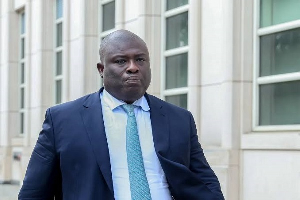 Asante Kwaku Berko is former MD of Tema Oil Refinery and former Goldman Sachs executive






Opinions