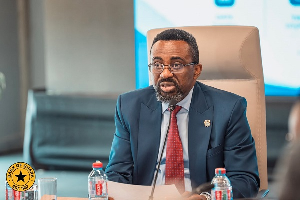
Ghana has taken a major step towards strengthening its science, technology and innovation ecosystem following the completion of a three-year partnership with the Republic of South Korea aimed at establishing the country’s first National Research and Innovation Management System.
The project, implemented by the Ministry of Environment, Science and Technology (MEST) in collaboration with South Korea’s Science and Technology Policy Institute (STEPI), forms part of the K-Innovation Partnership Programme, which supports countries in developing stronger research and innovation systems through policy support, capacity building and knowledge exchange.
The initiative seeks to create a centralized digital platform that will capture and manage information on researchers, research projects, funding opportunities and national research statistics, making critical data readily available for policy formulation, planning and decision-making.
Speaking at a dissemination seminar in Accra on August 6, 2026, Director of Science and Technology at MEST, Kwamena Essilfie Quaison, said the project would help address the longstanding challenge of fragmented research information across institutions.
“The science, technology and innovation system is important, and activities must be well coordinated and properly structured for national benefit,” he said.
'That is what a responsible President should do' – Abena Osei-Asare throws challenge to Mahama
According to him, many scientific institutions currently operate independently without adequate coordination, making it difficult to access comprehensive information needed for national development planning.
“We are riding on the back of this project that we have been able to secure with the Republic of South Korea to make sure that we have a system in place, a Research and Innovation Information Management System, that brings together all relevant activities happening in the ecosystem,” he explained.
Quaison noted that the system would enable policymakers and government officials to access research-related information at the click of a button, improving evidence-based decision-making across sectors.
“Whether it is the President, a minister or a policymaker, they can access relevant information from the comfort of their offices for decision-making regarding science and technology development,” he said.
He stressed that science and technology remain critical drivers of development worldwide and that improving coordination within Ghana’s research ecosystem would contribute significantly to the country’s development agenda.
Deputy Director-General of the Council for Scientific and Industrial Research (CSIR), Prof Marian Quain, described the platform as a critical tool for improving access to research information and expertise across the country.
“The process has been to set up a national database where all researchers will be keyed in, research projects will be captured, funding sources documented, and calls for research proposals made available,” she said.
She explained that the platform would allow authorities and institutions to easily identify expertise available within Ghana and connect researchers with opportunities for collaboration and funding.
“There are experts that we have in-country, yet sometimes we look outside for those same skills. This platform will help us look inward first to identify the expertise we already have before seeking support elsewhere,” Prof Quain noted.
She added that the system would also support the effective management of the National Research Fund by helping identify researchers and institutions that can contribute to national research and development priorities.
The project further proposes a governance framework that would enable coordinated management of research information among ministries, universities, research institutions, the private sector and development partners. This is expected to improve transparency, reduce duplication of research efforts and strengthen collaboration across the national innovation ecosystem.
Associate Research Fellow at STEPI, Dongwook Seoh, said the project team had successfully developed a cloud-based pilot database system that is fully operational and ready to be handed over to the Ghanaian government.
He expressed optimism that the next phase would focus on strengthening governance structures and ensuring the long-term sustainability of the system.
“Our biggest expectation is that Ghana will continue working on governance reforms across ministries, agencies and institutions to ensure that the system remains sustainable, operational and continuously improved,” he said.
The partnership was implemented in three phases. The first phase in 2024 focused on mutual learning between Ghanaian and Korean research and innovation systems.
The second phase in 2025 centred on designing Ghana’s Research and Innovation Management System and developing a roadmap for its implementation. The final phase in 2026 focused on capacity building and preparing institutions for the adoption and use of the system.
One of the key outcomes of the project is the development of the Ghana Research and Innovation Information Management System (RIIMS), a pilot online platform that includes a searchable database of research projects, a national directory of researchers, a portal for research funding opportunities, and dashboards containing national research and development statistics.
AM
#TrendingGH: 'Revisit the case' - Netizens react to controversial court ruling
Business News of Friday, 7 August 2026
Source: www.ghanaweb.com
Ghana and South Korea complete three-year partnership to build national research
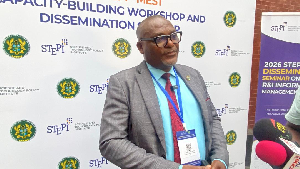 Director of Science and Technology at MEST, Kwamena Essilfie Quaison