Ghana’s electricity sector recorded an estimated $1.4 billion shortfall in 2025, equivalent to 1.2% of GDP, despite ongoing reforms supported by the International Monetary Fund (IMF).
The figure marks a slight improvement from the $1.6 billion gap in 2024, driven mainly by favourable exchange rate movements and reduced reliance on costly liquid fuels rather than efficiency gains.
In its latest Selected Issues Report, the IMF cautioned that the gains remain fragile unless government sustains reforms to address structural weaknesses.
“The annual gap between the sector’s revenues and costs stood at approximately US$1.4 billion in 2025, reflecting the combined effect of tariff, distribution, and collection gaps,” the Fund stated.
BoG's gold purchase programme posted $1.7 billion loss in 2025 - IMF report
The report highlighted three persistent challenges: tariffs below cost‑recovery levels, high technical and commercial losses, and weak revenue collection. Ghana’s collection rate remained around 86%, with government institutions accounting for 16% of unpaid bills by end‑2025.
Financial pressures forced government transfers to the sector to rise to $2 billion in 2025, up from $1.5 billion in 2024.
Debts owed to Independent Power Producers (IPPs) and fuel suppliers peaked at $2.2 billion early in 2025 before easing to $1.7 billion by year‑end.
The IMF also noted policy setbacks before the 2024 elections, including suspended tariff adjustments and breaches in revenue‑sharing agreements, which added about $500 million in extra government transfers.
To address the crisis, Ghana resumed quarterly tariff adjustments in 2025 and introduced a new framework covering 2026–2030.
IMF endorses Ghana’s fiscal adjustment plan
Tariffs rose nearly 10% in January 2026, but progress in reducing distribution losses remains slow, with losses still at 27%, above the World Bank’s target of 24% by end‑2026.
The IMF urged Ghana to maintain tariff discipline, improve revenue collection, cut power losses, and involve private operators in parts of the Electricity Company of Ghana (ECG) to prevent renewed financial stress.
DR/SA
Business News of Thursday, 6 August 2026
Source: www.ghanaweb.com
Ghana's power sector still losing $1.4 billion despite reforms - IMF
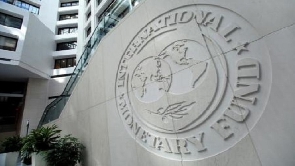 The International Monetary Fund (IMF)