Many banks in Ghana now find themselves in a race of time to avoid new regulatory sanctions by reducing their non-performing loans ratios (NPLs) to below 10 percent of their respective gross loan books before the December 31, 2026 deadline given them by the Bank of Ghana.
Although the sanctions to be applied to lenders not in compliance by the deadline have not been announced publicly, Business Post has learnt that the sanctions for non-compliance may become increasingly severe after the deadline.
Banks exceeding the prescribed limit face supervisory restrictions that may include intensified regulatory oversight, mandatory corrective action plans, limitations on dividend payments, restrictions on executive bonuses, enhanced provisioning requirements, and other prudential measures considered necessary by the Bank of Ghana.
The regulator also retains authority under the Banks and Specialized Deposit-Taking Institutions Act to impose administrative penalties or additional supervisory interventions where institutions fail to restore compliance.
These sanctions are deliberately designed to influence management behaviour. Restrictions on dividends directly affect shareholder returns, while limits on executive remuneration create personal incentives for management teams to improve asset quality rather than merely pursue rapid loan growth.
Increased supervisory scrutiny can also raise compliance costs and reputational risks for affected institutions.
Ghana’s banking industry has made measurable progress in reducing non-performing loans (NPLs) over the past two years, but the Bank of Ghana’s requirement that every regulated bank reduce its NPL ratio to 10 percent or below by December 31, 2026 presents one of the sector’s biggest prudential challenges since the banking sector clean-up.
The central question is whether banks possess sufficient capital, reserves and earnings to absorb the write-offs that will inevitably be required, while simultaneously maintaining adequate lending to support economic growth.
The numbers suggest that, for the banking industry as a whole, the answer is cautiously affirmative, although several individual banks may struggle.
According to the Bank of Ghana, the industry’s NPL ratio declined from 23.1 percent in June 2025 to 16.1 percent in June 2026, reflecting both stronger credit growth and reductions in the stock of bad loans.
Nevertheless, the industry remains well above the regulator’s 10 percent ceiling, meaning that a further reduction of roughly 6.1 percentage points is required within the remaining months of 2026.
The challenge facing many banks is compounded by the fact that not all bad loans have been fully provisioned.
'We will not relent' – Dr Ato Forson assures investors on Ghana's recovery
Under prudential accounting standards, banks are expected to make impairment provisions reflecting expected credit losses. Where provisions remain inadequate, eventual write-offs directly reduce profits and, if losses exceed current earnings, begin to erode shareholders’ equity and regulatory capital.
The banking industry’s gross NPL ratio reached 18.9 percent at the end of December 2025 and 18.7 percent by February 2026, showing relative recovery from peaks above 22 percent–24 percent during prior macroeconomic stresses.
But the adjusted NPL ratio (excluding fully provisioned loss category) dropped to 5.0 percent by December 2025 and about 8.9 percent in early 2026 reports, revealing that a dominant portion of the bad loan pool consists of legacy loans sitting squarely in the “loss” category, carrying 100 percent provisions.
Fortunately, Ghanaian banks have entered this exercise, aimed at lowering their NPL ratios, from a position of considerably greater strength than during the 2017-2019 banking crisis.
Following recapitalization, improved profitability and higher retained earnings, most banks now maintain capital adequacy ratios comfortably above minimum regulatory requirements.
The industry’s capital adequacy ratio (CAR) as at June this year was a robust 20.4 percent.
Fitch Ratings concluded in late 2025 that the vast majority of Ghanaian banks should be capable of reducing their NPL ratios below 15 percent by the end of 2026, largely through recoveries and write-offs, although only a handful were already below the ultimate 10 percent threshold.
Fitch nevertheless cautioned that a small number of institutions could experience capital pressure as regulatory forbearance expires.
The distinction between industry-wide capacity and institution-specific capacity is therefore critical.
Large banks with diversified earnings, substantial capital buffers and strong profitability can generally absorb sizeable write-offs through retained earnings accumulated over several years.
A bank earning several hundred million cedis annually can progressively absorb additional provisions without materially weakening its capital position. Smaller institutions, particularly those with concentrated loan portfolios or already thin capital buffers, may find identical write-offs much more painful.
A clearer picture of the specific circumstances facing each individual bank will become clearer when they publish their half year financial statements for 2026 (covering January to June) shortly although even this will be far from conclusive since subsequent major recoveries of underperforming loans or substantial provisions made against doubtful loans between now and the end of the year can quickly change a bank’s NPL ratio.
Another mitigating factor is that write-offs do not necessarily represent fresh economic losses.
In many cases, the underlying credit loss has already been recognized through provisions accumulated over previous reporting periods.
Where loans have already been substantially provisioned, the accounting write-off merely removes the impaired asset from the balance sheet without materially affecting current-year profitability. The greatest pressure therefore falls upon banks whose doubtful loans remain under-provisioned.
An important concern, however, is whether these regulatory pressures may unintentionally discourage new lending.
There is genuine reason for caution. Every new loan introduces the possibility of future default, and banks approaching the regulatory deadline may prefer to preserve existing asset quality rather than expand their credit portfolios.
Credit officers naturally become more conservative when management compensation and dividend distributions depend upon maintaining low NPL ratios.
Indeed, evidence from other banking systems suggests that aggressive supervisory targets often produce a temporary tightening of lending standards.
Banks become more selective regarding sectors, collateral quality and borrower cash flows. Lending to small and medium-sized enterprises—which traditionally experience higher default rates may become particularly constrained, while credit increasingly favours large corporations, government-related entities and customers with established repayment histories.
If the BoG’s initiative to lower NPLs does dissuade commercial banks from new lending in the short term, this would be ironic and counter-productive since the central bank’s stated objective is to improve credit quality so as to encourage more lending.
BoG Governor Dr Johnson Pandit Asiama, told bankers on Tuesday, August 4, 2026 that “High non-performing loans tie up capital, raise recovery costs and restrict new credit, most severely for smaller and higher-risk borrowers.
Reducing them is therefore not merely a supervisory concern; it is part of Ghana’s development agenda.”
He insisted that “stronger credit appraisal, Board approved reduction plans, effective recovery functions and the write-off of fully provisioned exposures with no realistic prospect of recovery” would improve bank’s credit quality, rather than encourage a retreat from new lending.
Indeed, better credit underwriting, stronger monitoring and earlier intervention in distressed accounts should improve the long-term quality of bank lending.
Rather than indiscriminately reducing credit, prudent banks are likely to refine their risk appetite, strengthen loan appraisal procedures and price risk more accurately. Such improvements enhance financial stability even if overall loan growth moderates temporarily.
Several factors should also help sustain lending despite tighter supervision. Ghana’s improving macroeconomic environment, moderating inflation, declining policy interest rates and stronger economic growth prospects reduce credit risk and improve borrowers’ repayment capacity.
Expanding use of credit bureaux, digital cash-flow assessment and collateral registries further strengthens banks’ ability to distinguish creditworthy borrowers from higher-risk applicants.
Overall, the industry appears capable of achieving substantial further reductions in NPLs without jeopardizing systemic stability.
The aggregate banking sector possesses significantly stronger capital, liquidity and profitability than during the previous banking crisis, providing considerable capacity to absorb additional write-offs.
However, achieving the final reduction from approximately 16 percent to 10 percent will require a combination of aggressive loan recoveries, restructuring where commercially viable, accelerated write-offs of unrecoverable exposures and disciplined new lending.
Business News of Thursday, 6 August 2026
Source: businesspostonline.com
Ghana's banks in race against time to avoid new sanctions
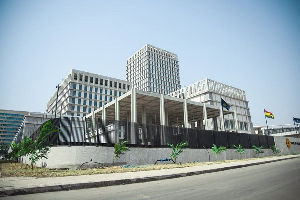 The Bank of Ghana headquarters




Entertainment