Youth joblessness remains a central economic hurdle in Ghana as international financial institutions highlight deep vulnerabilities alongside modest financial gains.
The International Monetary Fund (IMF) stated that youth unemployment in Ghana has been stubbornly high at 30% among people aged 15 to 24. In its country report on Ghana, it said social conditions remain challenging despite safeguards.
Job scarcity disproportionately affects the younger demographic. Authorities look toward structural adjustments to shift this trajectory.
Broader financial metrics show small areas of progress. The World Bank estimates that poverty (measured at $3 a day [approx. GHS 35.10]) declined modestly to 37.1% in 2025 (38.9% in 2022), reflecting disinflation and improved growth in agriculture and services.
This deceleration in price growth helped ease household pressures. Agricultural expansion and service sector output provided foundational support for this shift.
Strategic Frameworks for Job Creation
Ghanaian officials are implementing long-term blueprints to foster labor absorption.
To address the issue of unemployment, particularly among the youth, the IMF said the authorities’ Medium-Term National Development Policy Framework (2026- 29) emphasizes growth centered on labor-intensive sectors.
Targeting labor-heavy industries aims to maximize workforce engagement. Success depends on execution across key economic pillars.
Safety nets require significant reinforcement to protect vulnerable populations. The IMF continued that Ghana faces substantial social protection gaps that require a sustained scaling up of allocations and improvements in program effectiveness.
“While social spending has increased modestly under the ECF, coverage and benefit levels remain low relative to needs and regional comparators,” the report said.
GTreat cargo insurance as an investment, not cost - Businesses advised
Resource constraints limit the reach of existing welfare programs. Expanding fiscal capacity remains a primary challenge for administrators.
Welfare Program Limitations
Targeted financial relief fails to encompass the totality of citizens in need. It added that the Livelihood Empowerment Against Poverty (LEAP) coverage, even after the planned expansion, will reach only a fraction of the almost 40% of Ghanaians living below the international poverty line.
This coverage gap leaves millions exposed to economic volatility. Policymakers face difficult choices regarding resource distribution.
Education Deficits and Institutional Lags
Human capital development encounters systemic hurdles. While education outcomes have shown improvement, it said enrollment rates, particularly at the secondary level remain below SDG targets, and quality indicators lag peer countries.
Closing these educational gaps is vital for future workforce competitiveness. Institutional upgrades must accompany financial investments.
Macroeconomic Resilience and Vulnerability
Global financial pressures continue to threaten domestic stability.
“In the context of ongoing fiscal discipline, global uncertainty, and ongoing utility tariff adjustments, strengthening social safety nets and implementing well-targeted social policies is essential to protect the most vulnerable from the adverse impacts of macroeconomic shocks,” it concluded.
Balancing fiscal restraint with social protection defines Ghana’s immediate economic test. Strategic policy execution will determine long-term resilience.
Regional Resonance and Continental Imperatives
Across West Africa and the wider continent, the dialogue surrounding economic inclusion increasingly centers on bridging the transition from classrooms to formal enterprises.
Regional policy advisors emphasize that unlocking the demographic dividend requires scaling up support for small and medium-sized enterprises.
Aligning macroeconomic recovery packages with grassroots enterprise development remains critical for sustainable growth across the subregion.
Business News of Wednesday, 5 August 2026
Source: gbcghanaonline.com
Youth unemployment in Ghana remains high - Report
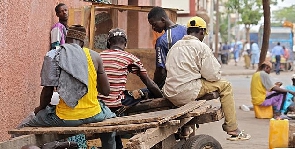 File photo of unemployed persons



Entertainment