The Ghana cedi is expected to regain stability in the coming weeks despite heightened demand for foreign exchange from corporate institutions, as strong external buffers, robust export earnings and healthy reserve levels continue to underpin confidence in the local currency.
The cedi has, however, come under renewed pressure in recent weeks as concentrated demand for foreign exchange from key corporate sectors has briefly exceeded available dollar liquidity in the market.
The recent depreciation has renewed concerns over the cedi’s near-term outlook. However, economists argue that the weakness reflects a temporary mismatch between foreign exchange demand and market liquidity, rather than a deterioration in Ghana’s underlying macroeconomic or external-sector fundamentals.
The cedi, which strengthened to around GH¢11.04 against the US dollar in mid-June following improved foreign exchange liquidity, has since weakened to about GH¢11.66 at the close of trading on Friday last week as demand for dollars from oil importers, manufacturers and multinational companies repatriating profits temporarily outpaced supply in the market. Market observers, however, say the pressure reflects seasonal corporate demand and unmet foreign exchange auction bids.
They expect the cedi to regain stability once corporate demand moderates and stronger export receipts, reserve buffers and improved market liquidity begin to narrow the gap between foreign exchange demand and supply.
Bank of Ghana data show that the country recorded a trade surplus of US$8.81 billion in the first half of 2026 after exports reached US$18.29 billion against imports of US$9.48 billion. Gold exports alone generated US$12.50 billion during the period, while cocoa and crude oil exports contributed US$2.29 billion and US$1.71 billion respectively.
The current account also remained firmly in surplus at US$5.10 billion, equivalent to 3.8% of Gross Domestic Product, while inward private transfers totalled US$3.65 billion.
These inflows continue to provide a steady source of foreign exchange for the domestic market. Ghana’s reserve position also remains comparatively strong despite recent external debt repayments.
Gross international reserves stood at US$12.94 billion at the end of June, providing five months of import cover, well above the traditional international adequacy benchmark of three months of import cover.
The Bank of Ghana’s gold holdings also increased to 24.4 tonnes, valued at US$3.65 billion, reflecting continued reserve accumulation through domestic gold purchases.
The strength of these indicators has led many economists to conclude that the recent depreciation is being driven more by the timing of foreign exchange demand than by any fundamental imbalance in the economy.
Demand for dollars has risen as Bulk Oil Distribution Companies finance petroleum imports, manufacturers purchase raw materials and multinational companies repatriate dividends and settle external obligations.
Such transactions typically intensify during specific periods of the year – such as this one – temporarily tightening liquidity in the foreign exchange market even when export receipts remain robust.
The Bank of Ghana has sought to improve the functioning of the market through a more structured foreign exchange operations framework, including spot and forward foreign exchange auctions, while maintaining its policy rate at 14% to preserve macroeconomic stability.
The central bank has also continued to enforce foreign exchange market rules aimed at promoting orderly trading and discouraging speculative activity.
The IMF has similarly observed that Ghana’s external position has strengthened considerably over the past year, supported by strong gold exports, improving reserves and continued fiscal consolidation, developments that have reinforced confidence in the cedi and the broader economy.
Also, the combination of a sizeable trade surplus, a strong current account position, nearly US$13 billion in reserves and continued gold export inflows provides the Bank of Ghana with a much stronger platform from which to manage temporary pressures than was the case during previous episodes of exchange-rate instability.
The cedi is therefore likely to bounce back towards a more stable trading range once corporate foreign exchange demand begins to ease and continued export inflows improve dollar liquidity in the market.
Business News of Tuesday, 4 August 2026
Source: economytimesnews.com
Cedi to remain stable despite rising dollar demand - Report
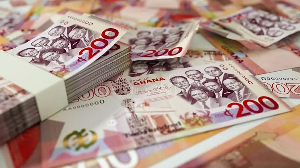 File photo of cedi notes