The Dagbon Kingdom is expected to have a new ruler following the death of Ya-Na Abukari II, bringing renewed attention to the history and traditional succession of one of Ghana's oldest and most influential kingdoms.
Dagbon, which has existed for several centuries, is believed to have been established between 700 and 900 years ago and has played a significant role in the political, cultural and economic history of northern Ghana and parts of West Africa.
An article published by classfmonline.com traces the origins of the kingdom to Tohazie, popularly known as the "Red Hunter", a warrior believed to have hailed from Zamfara in present-day northern Nigeria.
Tohazie, the Red Hunter
According to the article, Tohazie was a skilled hunter and an expert in archery who migrated westwards and eventually settled in a village within the Mali Empire.
At the time, the village was facing a severe drought, while its main source of water had been taken over by a wild bush cow that terrorised and killed residents who attempted to access the river.
Tohazie reportedly led the people to defeat the animal, making the water source accessible again. He subsequently helped organise the community and led them in wars against neighbouring villages.
In recognition of his bravery and service, Tohazie was given a Malian princess, Pagawubga, in marriage. The couple had a son, Kpogon-umbo.
Kpogon-umbo and Naa Gbewaa
After spending some time in Mali, Kpogon-umbo and his followers came into conflict with the expanding Songhai Empire in West Africa.
The resulting reprisals forced Kpogon-umbo and his followers to move southwards. He eventually seized power and ruled over Biun in present-day Gurma.
His son, Naa Gbewaa, also known as Bawa, later left Biun with some of his followers and moved to Pusiga in present-day north-eastern Ghana.
Naa Gbewaa established his kingdom at Pusiga, where he ruled until his death.
Three brothers, three kingdoms
Following Naa Gbewaa's death, his son Zirili succeeded him. However, succession disputes involving three of Zirili's younger brothers, Tohagu, Mantambo and Sitobu, eventually led to the fragmentation of the kingdom.
The three brothers moved southwards from Pusiga with their respective followers.
Tohagu established the Mamprusi Kingdom, Mantambo founded the Nanung Kingdom, while Sitobu established what became the modern Dagbon Kingdom.
The shared ancestry of the three kingdoms explains why the people of Mamprugu, Nanung and Dagbon traditionally regard themselves as brothers.
Another child of Naa Gbewaa, his daughter Yentuagri, is also said to have married a Grumah, with whom she established the Moshi Kingdom.
Sitobu initially settled at Gambaga before moving further south to Namburugu, near Karaga, where he established the Dagbon state.
His son, Naa Nyagsi, who ruled from 1416 to 1432, succeeded him and embarked on a series of wars that expanded the kingdom.
Naa Nyagsi eventually established his capital at Yani Dabari in Diyali, near present-day Tamale. He also developed a political system in which his sons, brothers and uncles were enskinned as rulers over various territories and communities.
The 18th century and the Second Kingdom
Around 1700, the capital was moved from Yani Dabari to another settlement also known as Yani, now Yendi, in the eastern part of the kingdom.
The relocation was partly attributed to incessant wars with neighbouring communities.
One of the prominent rulers during this period was Naa Zangina, who in 1713 defeated neighbouring forces at Sang, near Yendi.
Naa Zangina is regarded as Dagbon's first Muslim ruler and is credited with promoting trade with neighbouring communities and kingdoms.
Following the relocation of the capital and the restoration of relative peace, a Muslim community developed around the Ya-Na's palace in Yendi.
According to the historical account, Muslim scholars of Mande and Hausa origins played important roles in introducing and propagating Islam in the kingdom. They served as mallams to the Ya-Na and were given various titles at the palace, including WalguNaa, Nayil Liman and Yidan Kambala.
Trade also expanded significantly during this period.
Overlord of Dagbon Yaa Naa Abukari II is dead
Dagbon's links with Dyula traders, and later Hausa traders, connected the kingdom to other parts of West Africa and beyond, including the Fezzan region of present-day Libya and the Bight of Benin.
By 1788, Yendi had reportedly developed into one of the largest markets in West Africa.
Because of its cultural links with several Sahelian kingdoms and empires, including the Mossi Kingdom, Mali and Songhai Empires and the Hausa states, Dagbon became an important trading centre for commodities such as salt and kola nuts, as well as enslaved people.
Colonisation and the division of Dagbon
In 1888, Dagbon became part of a neutral zone stretching from Yeji to Yendi, created to prevent conflict between German and British colonial interests in the region.
The area was later divided between the two colonial powers, with Yendi coming under German control.
This effectively separated the Ya-Na from portions of his people in the west.
In 1896, German forces clashed with the Dagombas at the Battle of Adigbo. The Dagombas were defeated because they were unable to match the Germans' superior weaponry.
Three years later, in 1899, Britain and Germany formally divided Dagbon between German Togoland and the Gold Coast.
Following World War I, eastern Dagbon became part of British-administered mandated territories under the League of Nations. The eastern and western parts of the kingdom were subsequently reunited, allowing the Ya-Na to regain control over his people.
The British introduced a system of indirect rule under which Dagomba chiefs administered local government structures.
However, the policy also reinforced Dagomba dominance over some minority groups in the area.
The British also invested relatively little in the economic development of Dagbon. The introduction of a head tax forced many people to migrate to the southern Gold Coast, where they worked in mines and on cocoa farms to raise money to pay the tax.
Dagbon retained a distinct constitutional position during the colonial period before eventually becoming part of the structures of the Gold Coast and British Togoland.
Dagbon today
Today, the Gbewaa Palace remains in Yendi, the traditional capital of the Dagbon Kingdom.
The kingdom is organised into several territorial chiefdoms, which are broadly classified into divisional and village chieftaincies.
There are three major "Nam" Gates reserved for the sons of former Ya-Nas: Karaga, Savelugu and Mion.
Occupying one of these positions is traditionally a qualification for a royal to contest the Namship, or the highest traditional office at Yendi.
Succession to the Namship historically rotated among three royal houses but has since been reduced to two principal gates: the Abudu and Andani families.
Lesser chieftaincies are generally reserved for grandsons of former Ya-Nas.
Despite its rich history and enduring traditional authority, Dagbon has experienced prolonged succession disputes and conflicts, particularly over the past century.
The death of Ya-Na Abukari II has therefore once again brought the kingdom's long history, royal succession system and the relationship between the Abudu and Andani gates into the national spotlight.
BAI
AROUND TOWN: Are Toyota Voxy vehicles fit for Ghana’s roads?
General News of Monday, 3 August 2026
Source: www.ghanaweb.com
Three Brothers, Three Kingdoms: The history of Dagbon and its royal succession
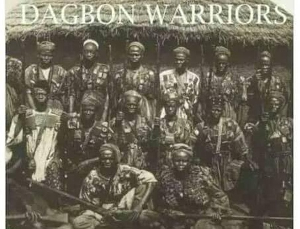 Tohazie is popularly known as the "Red Hunter"